New Zealand Pilsner beer food pairing opens up some of the most interesting territory in the lager world — because this isn’t a beer that behaves like other pilsners at the table. The tropical fruit and white wine aromatics from Nelson Sauvin and Riwaka hops create flavor bridges to food that a German or Czech pilsner simply cannot reach. This is a lager with the soul of a hop-forward ale, and pairing it requires thinking about both of those things at once.
This guide covers the flavor mechanics behind New Zealand Pilsner pairings, the specific dishes that bring out its best, what to avoid, and how to serve it properly. For the full history of the style, visit What is New Zealand Pilsner Beer? →. If you’d like to brew your own to pair with tonight’s dinner, see How to Brew New Zealand Pilsner Beer at Home →.
The Flavor Principles Behind New Zealand Pilsner Pairing
The first thing to understand about New Zealand Pilsner at the table is that its bitterness is moderate but present — typically 25–45 IBUs — and it is a dry, clean bitterness that finishes quickly and leaves the palate clear. This is the same mechanism that makes all pilsners food-friendly: carbonation physically lifts fat and oil from the palate, bitterness interrupts richness without overwhelming it, and the dry finish signals to the brain that the next bite is welcome. New Zealand Pilsner does all of this.
What it adds that other pilsners do not is the thiol-driven aromatics of New Zealand hops. Polyfunctional thiols — the same compounds that give Sauvignon Blanc its gooseberry and passionfruit character — are volatile aroma molecules that interact with food through shared scent compounds. This is the bridge mechanism at work: when a dish already carries tropical or citrus notes (think ceviche with lime, Vietnamese herbs, or a mango salsa), the beer’s aromatics amplify and harmonize rather than compete. The effect is close to what happens when you squeeze lime over tacos — the citrus doesn’t clash with the food, it completes it.
The carbonation level — moderately high for a lager, typically 2.4–2.6 volumes CO₂ — is the unsung hero of pairing. CO₂ bubbles scrub fat and oil physically from the tongue and palate, resetting it between bites. This is why pilsners of all types excel with fried foods, rich sauces, and oily fish. The carbonation cuts where the bitterness alone would not be enough.
Finally, the malt character of a New Zealand Pilsner is deliberately restrained — light, bready, clean — and this matters at the table because it does not impose itself on delicate flavors. A heavily malted beer competes with subtle dishes; a clean lager base supports them. This gives New Zealand Pilsner range: it can handle a delicate piece of grilled snapper without dominating it, and pivot to a plate of crispy fried chicken without being overwhelmed.
Seafood — The Natural Territory
The most natural pairing for New Zealand Pilsner is seafood, and the logic is straightforward. The tropical and citrus aromatics of Nelson Sauvin and Riwaka mirror the flavor compounds naturally present in fresh fish, shellfish, and dishes prepared with citrus. This is the bridge pairing mechanism operating at its cleanest.
Grilled snapper or kahawai with citrus: New Zealand’s own fish — snapper, kahawai, tarakihi — are delicate, sweet, and slightly mineral. Grilled over charcoal with a squeeze of lemon or lime, they share almost every flavor register the beer occupies: the citrus mirrors the Riwaka, the mineral quality echoes the beer’s lager character, and the slight char provides a contrast point for the beer’s gentle bitterness. This pairing borders on obvious, which is what makes it excellent.
Oysters: Raw oysters and pilsner have one of the longest pairing relationships in beer history. The saline, mineral quality of a fresh oyster is cut by carbonation and lifted by bitterness. New Zealand Pilsner adds a tropical top note that makes the pairing feel more complete than with a neutral German pilsner — the beer’s aromatics give the oyster’s brininess somewhere to go.
Ceviche and aguachile: The acid-marinated fish in ceviche — particularly versions with lime, cilantro, and chili — is one of the most natural flavor complements to a New Zealand Pilsner. The citrus in the dish extends the beer’s Riwaka aromatics; the clean lager base handles the heat without amplifying it; the carbonation refreshes between bites of the dense, acid-cured fish. A Peruvian-style ceviche with tiger’s milk is particularly well suited.
Beyond the Water’s Edge — Broader Pairings
New Zealand Pilsner’s versatility extends well past seafood. The beer’s hop character, dry finish, and carbonation work across a wider food landscape than its lager origins might suggest.
Thai and Vietnamese cuisine: The herbal, citrus-driven flavors of Southeast Asian cooking — lemongrass, kaffir lime, fresh mint, cilantro — share scent compounds with Motueka and Riwaka hops. A Thai larb (minced meat salad with lime and toasted rice), Vietnamese bún bò Huế, or a green papaya salad finds common ground with the beer’s aromatics. The carbonation handles the chili heat by resetting the palate without adding to it.
Fried foods: Tempura, fish and chips, Korean fried chicken — any dish where high heat and fat are the dominant cooking forces responds well to New Zealand Pilsner’s carbonation. The bubbles physically lift the oil; the bitterness cuts through the richness; the dry finish demands the next bite. This is contrast pairing at its most effective.
Fresh cheeses and soft rind: Young chèvre, fresh ricotta, or a mild brie rind pair well because their mild dairy fat and slight acidity find complement in the beer’s carbonation and hop citrus. Avoid aged hard cheeses, which will compete with and overwhelm the beer’s delicate hop aromatics.
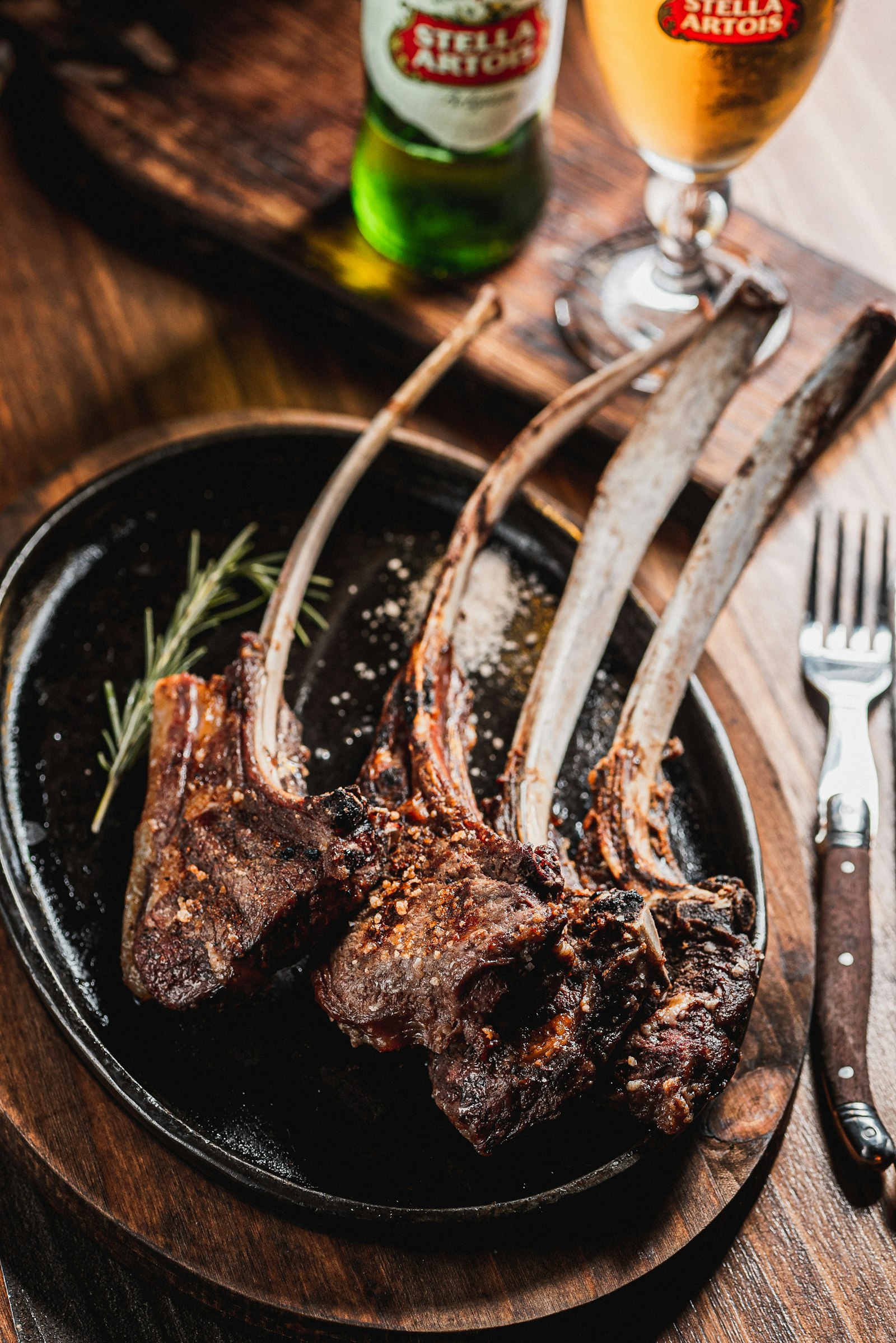
Spiced lamb and mint: Dishes from the New Zealand and Australian grilling tradition — lamb kofta with yogurt and mint, grilled lamb cutlets with chimichurri — work through the bridge mechanism: the herbaceous mint and the beer’s hop aromatics share terpene compounds. The lamb’s fat is cut by carbonation, and the slight gaminess of the meat is balanced by bitterness.
What to Avoid
Rich, creamy pasta and risotto: Heavy cream-based sauces mute the beer’s delicate hop aromatics and leave the palate coated, neutralizing the carbonation’s cleansing function. A carbonara or a truffle risotto simply overwhelms New Zealand Pilsner — the beer disappears. Save these dishes for a richer, malt-forward beer.
Strongly flavored aged cheeses: Aged cheddar, Parmigiano-Reggiano, Comté — cheeses with intense umami and concentrated fat will overwhelm the delicate tropical aromatics of New Zealand hops. What makes this beer interesting at the table is precision, and aged cheese disrupts it.
Heavily smoked or charred meats: A smoked brisket or heavily charred steak creates flavor intensity that New Zealand Pilsner cannot match — the beer will taste thin and watery alongside it. This is a matter of weight: smoked meat demands a beer with similar intensity of character.
Very spicy curries: While the beer handles mild to moderate heat well, a vindaloo or a very hot red curry generates more heat than the carbonation and light bitterness can neutralize. The beer will taste thin against aggressive heat, and the delicate hop aromatics will disappear entirely.
Desserts: The beer’s dry, bitter finish makes it a poor companion for sweet desserts. The bitterness amplifies against sweet flavors rather than complementing them, producing a harsh or unbalanced aftertaste. The exception might be a subtly sweet lime sorbet, where the citrus element creates a bridge — but this is the edge case, not the rule.
New Zealand Pilsner and Pacific Rim Cuisine
New Zealand Pilsner sits at the crossroads of two culinary worlds — the Pacific seafood tradition and the Southeast and East Asian flavors that have shaped New Zealand’s multicultural food scene. This makes it a natural companion for the Pacific Rim culinary territory more broadly.
Japanese food is particularly well served: a plate of salmon sashimi with ponzu, a bowl of ramen with a clean pork broth and scallion, or fresh edamame with sea salt all find common ground with the beer’s mineral cleanliness and tropical top notes. Sushi — particularly lighter white fish nigiri and rolls with cucumber and avocado — is an excellent casual pairing. The carbonation handles the wasabi heat and soy salt without effort.
Mexican coastal cooking — fish tacos with crema and lime, tostadas de ceviche, aguachile negro — maps almost perfectly onto the beer’s flavor profile. The shared citrus compounds create an almost seamless flavor transition between beer and food.
A Seasonal Perspective
New Zealand Pilsner is emphatically a warm-weather beer, and its best pairings follow seasonal rhythms.
In summer, the beer finds its natural home alongside grilled seafood, outdoor barbecues of spiced lamb and flatbread, and cold Vietnamese or Thai salads. The carbonation is especially welcome when ambient temperatures rise, and the hop aromatics — passionfruit, lime — are flavors the season naturally calls for. Serve cold, eat outside.
In cooler months, the beer’s food range narrows but doesn’t disappear. It handles roasted chicken with herbs, light vegetable soups, and the fresh cheeses and charcuterie of a casual board particularly well. The key is keeping the food flavors in scale with the beer’s moderate weight — New Zealand Pilsner is not a cold-weather workhorse, but it remains useful on the table as long as you don’t ask it to compete with heavy braises or rich stews.
How to Serve New Zealand Pilsner Beer
Serving temperature: Serve at 4–6°C (39–43°F) — slightly warmer than a mainstream commercial lager. At ice-cold temperatures (below 3°C / 37°F), the volatile thiol aromatics that define this style are suppressed, and the beer loses much of what makes it interesting. For food pairing, the higher end of this range — around 6°C (43°F) — allows the hop aromatics to express fully. Remove the bottle or glass from the refrigerator 5 minutes before serving rather than pouring ice-cold.
Glassware: The traditional vessel for pilsner is a pilsner glass — the tall, tapered, stemmed or non-stemmed cylinder that shows off the beer’s clarity, color, and carbonation. The narrow taper concentrates the aroma at the rim while keeping the beer cold longer than a wide-mouthed glass. This is the correct choice for New Zealand Pilsner, which benefits from both the visual display of its pale golden clarity and the aroma concentration the glass provides.
For a modern alternative, a tulip glass works well — the slight inward curve at the rim concentrates the hop aromatics more than a straight-sided glass, making it a useful option when you want to emphasize the beer’s tropical character at the expense of some visual drama. Some craft bars in New Zealand and Australia serve NZ Pilsner in tulip pints precisely because the glass does more work with the aromatics.
Avoid wide-mouthed glasses (pint glasses, dimpled mugs, or wine glasses) — the larger opening dissipates the volatile thiol aromatics too quickly, and you will lose the beer’s defining character within the first few minutes of pouring.
Pouring: Tilt the glass to 45 degrees and pour gently down the side until the glass is two-thirds full, then straighten and pour the last third down the center to build a compact, white head of 2–3 cm (approximately 1 inch). New Zealand Pilsner’s moderate-to-high carbonation means that an aggressive pour will produce an unmanageably large head — patience in the pour is rewarded with a better-looking, better-smelling glass.
New Zealand Pilsner covers more ground at the table than its clean lager origins might suggest — the defining characteristic is versatility within a specific flavor register. Pair it with ingredients that share its citrus, tropical, and mineral territory, and it rewards with pairings that feel inevitable rather than contrived.
Explore more: – What is New Zealand Pilsner Beer? The Complete Style Guide → – How to Brew New Zealand Pilsner Beer at Home →
Brew Cartographer explores the history, geography, and craft of rare and forgotten beer styles. Subscribe to our newsletter for new expeditions every week.