What is doburoku beer? It is, depending on how you look at it, either the oldest alcoholic beverage in Japan or the most illegal one — and for over a century, it was both. Long before sake was filtered, clarified, and bottled for sale, doburoku was Japan’s farmhouse ferment: unfiltered, cloudy, alive with yeast, and brewed in secret long after the Meiji government made it a crime. Understanding doburoku means understanding where sake came from — and why the Japanese government eventually decided to let it come back.
This expedition covers doburoku’s geography and origins, its turbulent legal history, what it tastes like in the glass, and where to find it today. If you want to brew it yourself, visit our How to Brew Doburoku at Home → guide. For pairing ideas and serving traditions, see the Doburoku Food Pairing Guide →.
The Geography: The Rice Fields and Shinto Shrines of Rural Japan
Doburoku does not belong to a single prefecture or city the way that Champagne belongs to France or Pilsner belongs to Bohemia. It belongs to the countryside — to the farmhouses and Shinto shrines scattered across the Japanese archipelago, from the northern paddies of Akita to the warmer terraced fields of Kyushu. Its production was tied directly to rice agriculture: wherever rice grew and koji (the mold Aspergillus oryzae) could be cultivated, doburoku could be made.
The name itself gives the style away. Written in hiragana as どぶろく, “doburoku” is thought to derive from “doro” (muddy) and “roku” (the liquid turbidity) — a direct description of its opaque, unfiltered appearance. Unlike polished sake, which is pressed, filtered, and often pasteurized until it runs clear, doburoku retains its fermenting solids: the rice pulp, the yeast cells, the residual koji. It is, in essence, sake at the moment before filtration, drunk as a finished beverage rather than an intermediate stage.
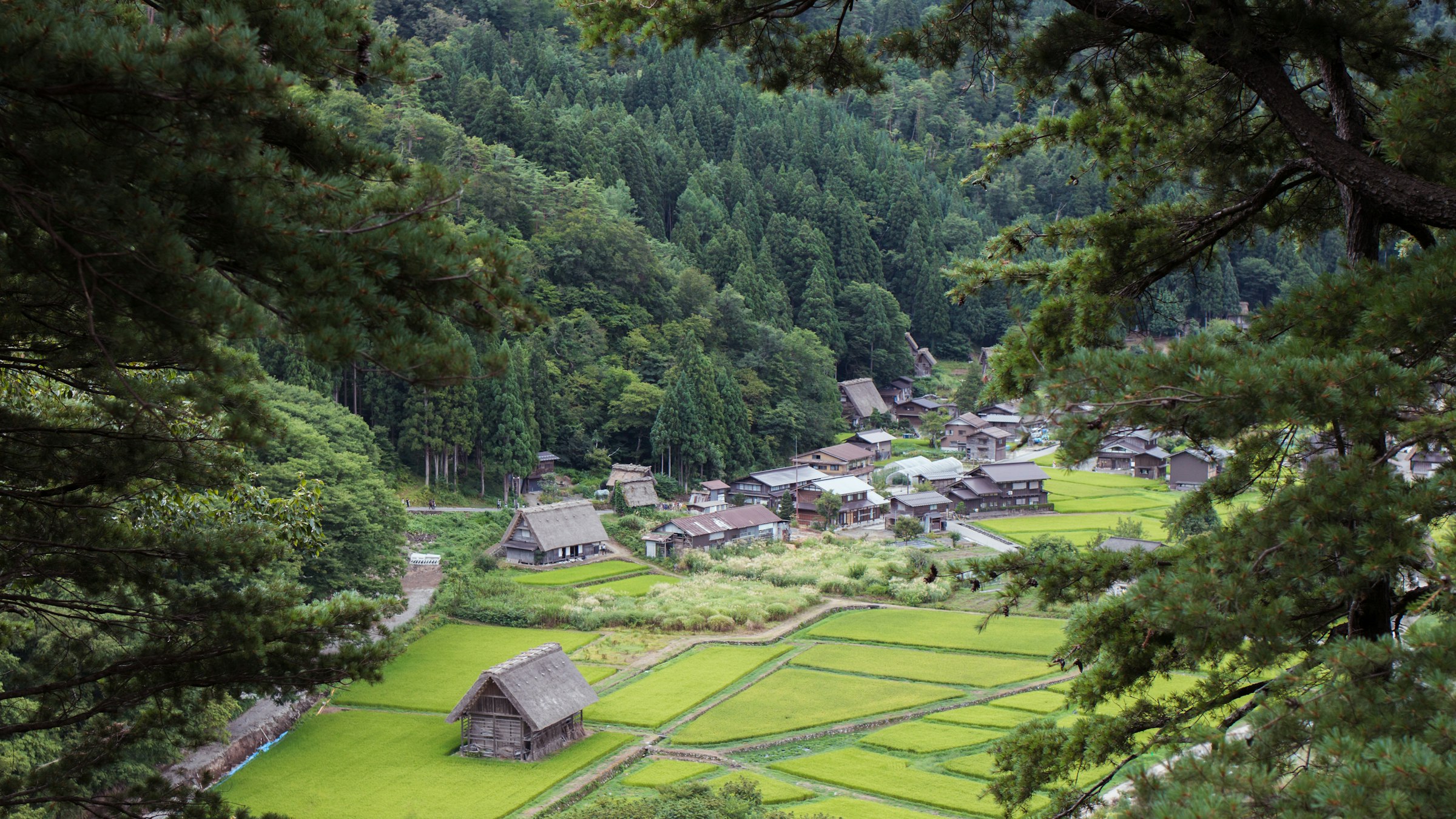
Shinto shrines played a crucial role in preserving and legitimizing doburoku production. Many rural shrines brewed it for ritual purposes — offering it to the kami (gods) at annual festivals — and this religious function gave them a degree of protection even as secular brewing was suppressed. The Shirakawa-go region in Gifu Prefecture, a UNESCO World Heritage Site famed for its gasshō-zukuri farmhouses, became one of the most associated areas for doburoku culture. Annual doburoku festivals there draw thousands of visitors each autumn, linking the drink firmly to Japanese rural and agricultural identity.
The History: Ancient Practice, Criminal Act, Rural Revival
Doburoku’s history stretches back to the earliest records of Japanese civilization. The Kojiki (712 CE), Japan’s oldest chronicle, contains references to sake-like rice fermentations, and doburoku — or something nearly identical — was almost certainly the form in which rice alcohol was consumed for centuries. Before filtration technology made polished sake possible, all rice beer was cloudy, thick, and consumed fresh.
The critical rupture came in 1899. The Meiji government, in its program of modernizing and industrializing Japan, imposed a nationwide ban on home fermentation under the Sake Tax Law. The motivation was fiscal: the government needed stable tax revenue from sake production, and unlicensed home brewing — especially doburoku, which was difficult to tax and monitor — threatened that revenue base. With a stroke of administrative law, a millennium-old farmhouse tradition became a criminal act. Penalties for home brewing were severe, and enforcement was real.
For over a century, doburoku survived underground. Farmers brewed it in secret, particularly for Shinto shrine festivals where religious exemptions were sometimes tolerated rather than prosecuted. The practice became, in the words of some Japanese food writers, a form of quiet agricultural resistance — farmers maintaining an ancestral right the state had taken away. The techniques were passed mouth to ear, parent to child, in the same way that farmhouse cheesemaking or traditional fermentation survived elsewhere in the world under similar pressures.
The formal revival came in 2003, when the Japanese government introduced the concept of “doburoku special zones” (どぶろく特区) as part of a broader rural revitalization initiative under the Special Zones for Structural Reform program. These special zones allowed licensed farms, inns (ryokan), and rural restaurants to brew and sell doburoku on their premises, provided they met certain production criteria. The intent was explicitly economic: to give rural communities a distinctive, place-specific product that could attract agritourism and differentiate local agriculture. The program was successful. Within a few years, hundreds of doburoku producers had received licenses, and the drink began appearing at farm restaurants, hot-spring inns, and regional festivals across Japan.
Today, doburoku occupies an interesting legal middle ground. It is not sake — it lacks the filtration that defines sake under Japanese law — and it is not beer under any standard international definition. It is its own category, commercially produced only by licensed facilities, and still firmly illegal to brew at home in Japan.
What is Doburoku Beer? Taste, Aroma, and Appearance
Appearance: Doburoku is unmistakably opaque. Depending on how recently it has been stirred, it ranges from ivory-white to light cream, with a texture closer to a thin congee or drinking yogurt than a conventional beer. It is poured from bottles that have been gently inverted to re-suspend the settled rice solids. No amount of time will make it clear.
Aroma: The nose is layered in ways that filtered sake is not. There is sake-like ethanol and rice sweetness, but also a yeasty funkiness — fresh bread, lees, sometimes a lactic sourness that speaks to the ongoing fermentation activity inside. Better examples show a bright, almost fruity top note from the sake yeast; rougher examples lean into the funky, fermented-grain earthiness. There is no hop aroma whatsoever.
Flavor: Doburoku is richer and sweeter than sake, with the residual fermentable sugars from incomplete fermentation giving a natural sweetness that pairs with noticeable acidity. The carbonation ranges from gentle to active — natural CO₂ from ongoing fermentation — and this spritz cuts through the sweetness to prevent cloying. The finish is yeasty and slightly grainy, sometimes with a warming ethanol note. It is more complex than sake precisely because it is less refined: the cloudy solids carry flavors that filtration would remove.
Mouthfeel: Thick and full-bodied by beer standards, approaching a drinking yogurt or a Korean makgeolli in texture. The rice solids suspended in the liquid give it substantial body. Carbonation levels vary considerably between producers and vintages.
ABV: Typically 8–14%, making doburoku one of the stronger fermented beverages in the farmhouse tradition. The high rice content and active yeast fermentation drive alcohol levels well above beer and closer to wine or sake.
Doburoku does not fit neatly into any BJCP 2021 category. For competition purposes it would most logically be entered as BJCP Category 27A: Historical Beer, which exists specifically to accommodate traditional fermented beverages that fall outside standard classifications.
The Ingredients That Make Doburoku Unique
Rice: The grain base of doburoku is short-grain Japanese rice — the same variety used in sake production, though doburoku does not require the degree of polishing (milling away the outer bran layers) that premium sake demands. Table-grade rice is acceptable, and many traditional farmhouse recipes used whatever the harvest provided.
Koji: The most distinctive ingredient, and the one that makes doburoku fundamentally different from barley beer. Koji (Aspergillus oryzae) is a mold cultivated on steamed rice. As it grows, it produces amylase enzymes that break down rice starches into fermentable sugars — performing the function that malting performs in barley-based brewing. Koji is the reason doburoku (and sake) can achieve high alcohol levels without the addition of external enzymes or a separate saccharification step.
Multiple parallel fermentation: What makes doburoku scientifically fascinating is the process known as multiple parallel fermentation (heikō fukuhatsu-hakkō in Japanese, often abbreviated MPF). In conventional brewing, saccharification (starch to sugar) and fermentation (sugar to alcohol) happen in sequence. In doburoku, they happen simultaneously: the koji produces sugars as the sake yeast consumes them. This continuous sugar release allows the yeast to tolerate higher alcohol levels than it otherwise could, driving ABV into the double digits without added sugar or fortification.
Sake yeast: Doburoku uses sake yeast strains (the Saccharomyces cerevisiae varieties favored in Japanese fermentation), which contribute characteristic floral and fruity esters very different from ale or lager yeasts.
Commercial Examples Worth Seeking Out
- Doburoku from Shirakawa-go (Gifu Prefecture, Japan): The most famous traditional examples come from farms and inns in this UNESCO-listed village. Seasonal production, consumed on-site or purchased at regional markets. Not exported.
- Terada Honke “Doburoku” (Chiba Prefecture, Japan): Terada Honke is one of Japan’s most adventurous sake breweries, working with natural fermentation methods. Their doburoku is available sporadically through Japanese specialty importers and is considered among the finest contemporary examples.
- Hakkaisan Brewery Doburoku (Niigata Prefecture, Japan): Hakkaisan, a respected large-scale sake producer, has produced limited doburoku editions. Their version demonstrates that the style can achieve refinement without sacrificing the characteristic cloudiness and richness.
- Tamagawa Doburoku by Kinoshita Shuzo (Kyoto Prefecture, Japan): Kinoshita is known for natural-process sake; their doburoku leans toward funkier, more active fermentation character — sought by fans of natural wine and pét-nat.
- Various ryokan and farm restaurant examples: Throughout Japan’s rural doburoku special zones, small-scale producers serve their own house versions. These are typically consumed fresh and on-premise, and vary enormously by producer, season, and even batch.
How Does Doburoku Compare to Similar Styles?
Doburoku is most often compared to two close relatives: sake and Korean makgeolli. The differences are meaningful.
Doburoku vs. sake: Sake is the filtered, often pasteurized product that follows the same basic process as doburoku. The distinction is filtration: nigori sake (cloudy sake) is sometimes confused with doburoku, but nigori is filtered through a coarse mesh — the defining difference — while true doburoku undergoes pressing but no filtration at all. Doburoku also has a wider acidity range and more active residual fermentation than most sake.
Doburoku vs. Korean makgeolli: Makgeolli is the closest non-Japanese parallel — a cloudy, lightly sparkling, low-to-moderate ABV rice beverage made across Korea. The critical difference is the saccharification agent: makgeolli uses nuruk, a Korean fermentation starter made with wheat and wild molds and bacteria, while doburoku uses koji. Nuruk introduces more lactic acid bacteria into the process, making makgeolli distinctly more sour and lower in alcohol (typically 6–8% ABV) than doburoku.
Doburoku vs. Chinese rice wine (mijiu): China’s many regional cloudy rice ferments share a common ancestor with doburoku but use different koji varieties and production traditions. Japanese doburoku is specifically defined by the use of Aspergillus oryzae and sake yeast — a combination refined over centuries in Japan.
Doburoku is not merely a curiosity — it is a living connection to the origins of one of the world’s great fermented beverage traditions. Its century-long illegality and the care with which farmers and shrine-keepers preserved it through that period make it one of the more remarkable stories of cultural resilience in fermentation history. That it is now commercially revived, even if still geographically bounded, means today’s explorers have a chance to taste what Japanese farmers drank before the government decided to stop them.
Ready to go deeper? – How to Brew Doburoku Beer at Home → – Doburoku Beer Food Pairing Guide →
Brew Cartographer explores the history, geography, and craft of rare and forgotten beer styles. Subscribe to our newsletter for new expeditions every week.