Cauim beer food pairing is an exercise in cultural imagination as much as flavor science: this ancient Tupi-Guaraní manioc ferment brings a profile unlike almost anything in the conventional beer landscape — starchy, gently sour, barely carbonated, and with an earthy quality that seems to carry the humidity of the Amazon basin itself. Unlike hoppy or roasty beers that assert themselves against food, cauim is subtle and participatory; it doesn’t dominate a meal but rather weaves into it, amplifying the flavors of what it accompanies through gentle acidity and textural softness. Approaching cauim pairing means leaving behind hop bitterness as a reference point and thinking instead in terms of acidity, earthiness, and the shared starchy character between the drink and the food.
This guide covers the flavor principles behind cauim pairing, specific food recommendations drawn from Amazonian and Brazilian cuisine as well as broadly accessible options, what to avoid, and a complete serving guide with glassware recommendations. For the history of cauim, visit What is Cauim Beer? →. To brew your own, see the Cauim Brew Guide →.
The Flavor Principles Behind Cauim Pairing
The most important thing to understand about cauim as a pairing partner is its acidity. Fermented from manioc with active lactic acid bacteria and wild yeasts, cauim develops a mild to moderate tartness — think a gentler version of the sourness in natural wine or a very young lambic. This gentle acidity performs the same function in pairing that it does in cooking: it cuts through fat, brightens richer flavors, and refreshes the palate between bites. The mechanism is chemical: lactic acid interacts with the perception of fat in food, reducing its heaviness and allowing other flavors to come forward.
Cauim’s near-zero hop content is equally significant. Without bitterness to consider, pairing logic becomes simpler: there’s no risk of bitterness amplification from ingredients like bitter vegetables or strong cheeses, which can clash with highly hopped beers. Cauim is broadly food-friendly in the way that natural wine is — present but not aggressive, a partner rather than a star.
The starchy character of manioc-based cauim creates a mirroring opportunity with starchy foods. When similar flavor compounds appear in both drink and food — the earthy sweetness of cooked cassava, for instance, echoing cassava-based dishes — the result is a bridge pairing that feels deeply coherent. This is the same logic that makes a smoky Rauchbier feel natural alongside smoked meats: shared flavor compounds create resonance.
Carbonation in cauim is minimal to absent. Where highly carbonated beers scrub the palate physically — the CO₂ lifts fat and oil — cauim’s still or barely sparkling character means the palate isn’t cleansed mechanically between bites. This makes cauim better suited to lighter, less fatty dishes than to rich, heavy preparations where a more aggressive carbonation reset would help.
Finally, cauim’s low alcohol (1–4% ABV) means there’s no spirit-like heat to manage. High-alcohol beverages can amplify capsaicin perception in hot dishes, but cauim’s low ABV makes it safe even with moderately spiced food, where it serves as a cooling and refreshing counterpoint.
Grilled and Smoked Fish — The Natural Match
Fish is cauim’s most natural companion, and the logic is rooted in geography: Amazonian peoples have always eaten fish alongside fermented manioc drinks. The Amazonian rivers — the Xingu, the Tapajós, the Amazon itself — are among the most biologically diverse freshwater systems on earth, and fish such as tambaqui (a large freshwater fish with rich, fatty flesh), pirarucu (one of the world’s largest freshwater fish, with firm, slightly sweet flesh), and tucunaré (peacock bass) have been staple foods in the same communities that produce cauim for millennia.
The pairing works on multiple levels. Cauim’s acidity cuts through the natural oils of fatty fish, functioning like a squeeze of lime or a splash of vinegar in cooking. The earthiness of manioc-based cauim echoes the slightly mineral quality of fresh river fish. And the low carbonation means the drink doesn’t overpower the delicate flavor of lightly prepared fish.
For homebrewers and restaurant diners without access to Amazonian species, the same principles apply to grilled trout, pan-fried tilapia, or cedar-plank salmon. The key is preparation: grilling, smoking, or light frying works better than cream-based sauces or heavily spiced preparations, which would overwhelm cauim’s gentle character.
Specific dish recommendations: – Grilled tambaqui with tucupi (a yellow sauce from cooked fermented bitter manioc juice) – Smoked trout with simple herbs and lemon – Fried tilapia with farofa (toasted manioc flour with butter and herbs) – Ceviche made with fresh river fish, lime, and cilantro — the shared acidity creates a bridge pairing
Brazilian and Amazonian Cuisine — Home Territory
Cauim’s most natural pairing territory is the cuisine of lowland Brazil and the Amazon basin, where the same starchy ingredients appear in both the drink and the food.
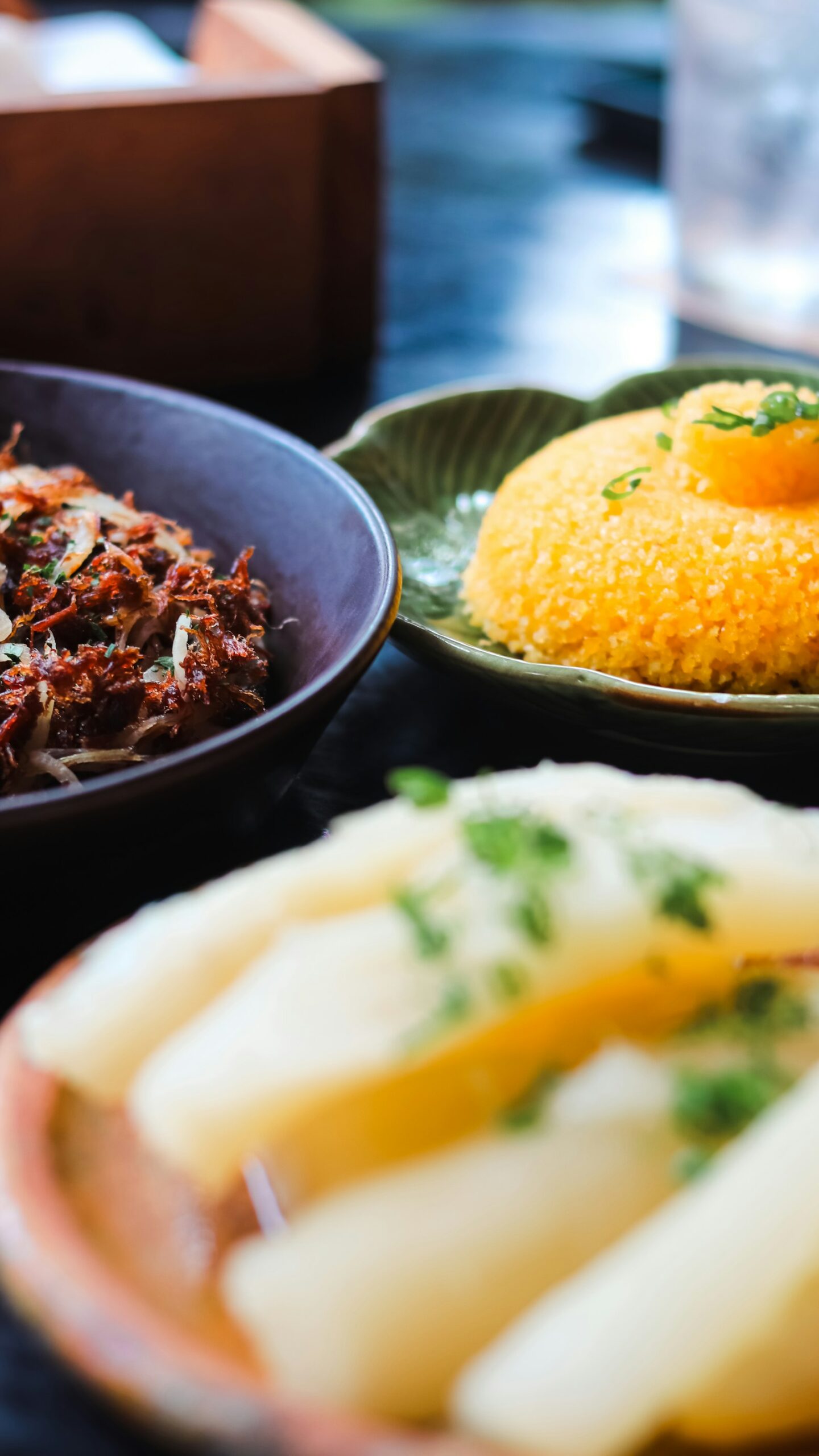
Manioc-based dishes: Perhaps the most coherent pairing in this guide — drinking cauim alongside food made from the same root creates deep flavor resonance. Tapioca crepes (tapioca de queijo, made from hydrated tapioca starch) with melted cheese, farofa (toasted manioc flour with butter and herbs), or beiju (a flatbread made from grated manioc) are all traditional Amazonian and northeastern Brazilian foods that share cauim’s starchy base and earthy sweetness. The mirror pairing here is almost too obvious, but “obvious” and “delicious” are not always separate categories.
Tucupi-based dishes: Tucupi is a yellow sauce made from the cooked fermented juice of bitter manioc — it undergoes fermentation followed by boiling (which removes toxic cyanogenic compounds) while developing a distinctive savory-sour-slightly pungent flavor. Traditional Amazonian dishes like tacacá and pato no tucupi pair beautifully with cauim. Tacacá is a soup of tucupi, dried shrimp, tapioca starch, and jambu — a herb (Acmella oleracea) that causes a mild numbing and tingling sensation on the tongue, which interacts pleasantly with cauim’s gentle acidity, softening its tartness on contact. Pato no tucupi (duck braised in tucupi with jambu) shares fermented cassava notes with cauim, creating layered resonance between drink and dish.
Vatapá and related dishes: Vatapá is a creamy dish from northeastern Brazil made from bread, shrimp, peanuts, coconut milk, and palm oil (dendê, from the African oil palm Elaeis guineensis, integral to Afro-Brazilian cuisine). Cauim’s gentle acidity cuts through the richness of coconut milk and dendê oil, while its earthiness complements the peanut and shrimp base — a contrast pairing where the beer provides balance to a richer dish.
Vegetables, Legumes, and Fermented Foods
Cauim’s lack of bitterness makes it unusually forgiving with vegetable-forward dishes. High-IBU beers can amplify bitterness in bitter vegetables — radicchio, endive, Brussels sprouts — through bitterness stacking. Cauim presents no such risk.
Root vegetables: Roasted cassava, sweet potato, yam, and plantain all share cauim’s earthy-sweet starchy quality. Roasted plantain in particular, with its caramelized sweetness, creates a mirror pairing that works especially well with sweeter, less attenuated versions of cauim consumed early in fermentation.
Fermented foods: Cauim’s own mild fermented character bridges naturally to other fermented or pickled foods. Pickled vegetables, light kimchi (lower spice versions), and fermented vegetable preparations from Brazilian and Amazonian traditions find a complementary partner in cauim — the shared lactic notes create coherence without redundancy.
Black beans and legumes: A lighter bean preparation works well alongside cauim — the acidity just manages to lift the beans’ earthiness. A full feijoada (Brazil’s traditional black bean and pork stew, typically including multiple cuts of cured, smoked, and fresh pork) is at the outer limit of what cauim can balance. If serving feijoada, pour generously and eat the beans as a lighter component rather than the full assembly of meats.
What to Avoid
Rich braised meats and heavy stews: A full feijoada, long-braised pork shoulder, or richly spiced mole will overwhelm cauim’s delicate flavor. Without aggressive carbonation or hop bitterness to cut through sustained richness and fat, cauim disappears beneath heavier preparations. Reserve it for lighter courses.
Aged and pungent cheeses: Strong aged cheeses — sharp cheddar, aged Parmesan, funky blue — have flavor intensities that dwarf cauim’s subtle profile. The cheese will make the cauim seem thin and flavorless by comparison. Young, mild fresh cheeses work better — fresh chèvre, mild ricotta, or queijo fresco.
Highly spiced hot preparations: While cauim’s low ABV means it won’t accelerate capsaicin heat the way a high-alcohol spirit would, its delicate flavor profile is easily masked by aggressive chili preparations. Very hot dishes simply erase cauim’s subtle starchy and earthy notes.
Chocolate and rich desserts: Chocolate’s intensity — and the sugar content of most desserts — makes cauim seem austere by comparison. The drink’s mild tartness also clashes with the sweetness of most confections.
Strongly flavored smoked or cured meats: Charcoal-grilled lamb, heavily smoked sausage, or aged charcuterie are too assertive for cauim to handle. The smokiness and salt of cured meats at full strength overwhelm cauim’s subtle earthy register.
A Seasonal and Contextual Perspective
Cauim is fundamentally a warm-weather, outdoor, communal drink — this context should inform pairing thinking. Traditional cauim is brewed and consumed at gatherings and festivals, alongside food that shares the informal, abundant character of communal eating: roasted fish wrapped in banana leaves, cassava bread, simple grilled preparations.
In temperate climates, cauim finds its best seasonal context in summer, paired with lighter grilled food at outdoor gatherings. Its low alcohol makes it a logical choice for afternoon eating — refreshing without the heaviness of higher-ABV options. Think of it as occupying the same niche as a very good natural wine or a quality session sour: present, interesting, refreshing, and suitable for multiple pours over a long meal.
Spring preparations — asparagus, peas, fresh herbs, young vegetables — pair well with cauim’s mild tartness and gentle character. The acidity bridges to spring vegetable sweetness without competing.
Building a Cauim Pairing Menu
A simple three-course menu demonstrating cauim’s range:
Starter: Tapioca crepes with queijo fresco and fresh herbs — mirror pairing, shared manioc base, gentle flavors that let cauim’s starchy character shine. Serve at 12–14°C (54–57°F).
Main: Grilled trout with farofa and pickled cucumber — the acidity of pickled cucumber bridges to cauim’s tartness, while the farofa mirrors the manioc note. The grilled fish provides protein and subtle smokiness. Serve cauim slightly warmer at 14–16°C (57–61°F) to open up the earthy aromatics.
Dessert: Fresh fruit — mango, pineapple, or papaya — with a squeeze of lime. The tropical fruit’s sweetness provides contrast to cauim’s earthiness; the lime bridges to its acidity. This is as dessert as cauim pairing gets.
Estimated consumption across the meal: 2–3 pours at 200–250 ml (7–8.5 fl oz) each, total approximately 0.5–0.75 liters (17–25 fl oz). At 2–4% ABV, this represents minimal alcohol consumption — cauim is genuinely low-alcohol by design.
How to Serve Cauim Beer
Serving temperature: 12–16°C (54–61°F). Serve cold enough to be refreshing but not so cold that the aromas are suppressed. Cauim served too cold loses its earthy, starchy character and tastes flat. For food pairing specifically, the warmer end of the range — 14–16°C (57–61°F) — opens up the earthiness and allows better integration with food flavors.
Glassware: Traditional cauim has no glass — it is served in clay cups, gourds, or communal bowls. Documented Tupi-Guaraní brewing accounts (from Staden, Léry, and later anthropological sources) consistently describe clay vessels and gourds as the serving vessel. For homebrewers and curious drinkers, the closest modern analog is a ceramic tumbler or wide ceramic mug:
- Traditional: A hand-thrown ceramic tumbler or clay cup — this is the most historically faithful vessel and genuinely improves the experience. The tactile experience of a clay cup connects the drinker to the tradition, and the wide mouth captures cauim’s gentle earthy aromatics effectively.
- Modern alternative: A wide-mouth tulip glass — the wide opening captures the gentle aromatics, and the slight bowl shape concentrates the earthy nose. This is preferable to a pint glass or narrow lager glass.
Avoid narrow tall glasses (stange, pilsner glass) — these are designed for highly carbonated beers and offer nothing to the essentially still, aromatic character of cauim. Wine glasses work adequately but impose a wine-drinking frame that feels incongruous with cauim’s earthy informality.
Pouring: Pour gently from the vessel into the cup, including a small amount of the sediment — traditional cauim is consumed with its yeast and solids in suspension, and the cloudiness is part of the sensory experience. Do not try to pour a clear beer: a clear cauim is either filtered (which removes authentic character) or very old (which means it has soured past its best).
What to avoid: Chilled stainless steel or thin-walled glassware — both drain heat from cauim too quickly. A thick ceramic cup retains temperature more effectively than a thin glass.
Cauim’s pairing logic asks you to approach flavor not with European beer assumptions but with an openness to how food and drink interact when neither is trying to dominate. Pair it with food that shares its geography and ingredient base, give it the warmer end of the serving temperature range, and drink it from something made of clay if you can find it.
Explore more: – What is Cauim Beer? The Complete Style Guide → – How to Brew Cauim Beer at Home →
Brew Cartographer explores the history, geography, and craft of rare and forgotten beer styles. Subscribe to our newsletter for new expeditions every week.