Tella beer food pairing is inseparable from Ethiopian food culture — this ancient gesho-bittered grain beer was never designed to stand alone. For millennia, tella has been poured alongside the communal meals that define Ethiopian hospitality: the injera-covered mesob (serving basket), the fragrant wots (stews), the piles of tibs (fried meats), and the raw kitfo. It is a beer built to accompany food, and understanding why it works so well with the Ethiopian table teaches you exactly how to pair it beyond that context too.
This guide covers the flavor principles behind tella pairing, the classic Ethiopian pairings, broader global food territory that works well with the style, what to avoid, and a full serving guide including the traditional vessel. For the style’s history and character, see What is Tella Beer? →. If you want to brew your own, see How to Brew Tella Beer at Home →.
The Flavor Principles Behind Tella Pairing
Tella arrives at the table with several distinct flavor forces: mild lactic sourness, herbal and resinous bitterness from gesho, earthy grain character from sorghum and teff, and low to moderate residual sweetness depending on how far fermentation has progressed. Understanding how each of these elements interacts with food is the foundation of pairing.
The lactic sourness in tella functions much as acidity does in wine or citrus does in cooking: it cuts through fat, refreshes the palate between rich bites, and amplifies savory flavors by contrast. Ethiopian cooking makes heavy use of spiced clarified butter (niter kibbeh) and high-fat preparations like kitfo (spiced raw beef); tella’s acidity acts as a natural counterweight, preventing richness from becoming cloying. The same mechanism makes tella an excellent partner for any fatty preparation — braised meats, creamy stews, cheese.
Gesho’s herbal bitterness adds a second pairing mechanism. Bitterness and umami-rich savory foods are complementary rather than competing flavor dimensions: the bitterness adds complexity that amplifies the savory character of the food without suppressing it. Tella’s herbal bitterness also has a specific affinity with the herbaceous spice blends of Ethiopian cooking — berbere (a complex blend of chili, fenugreek, coriander, and other spices) and mitmita (bird’s eye chili, Ethiopian cardamom, cloves) — because the gesho flavor shares herbal and resinous compounds with many of those spices, creating a bridge rather than a clash.
Low carbonation is the third element. Unlike highly carbonated beers that aggressively scrub the palate and reset flavor between bites, tella’s gentle effervescence allows flavor accumulation. This makes it better suited to long, unhurried communal meals — exactly the context in which tella was designed to be drunk — than to restaurant-style courses with clear breaks between dishes. The beer works with the food over time rather than against it.
Finally, tella’s low ABV (typically 2–4%) means it does not anesthetize the palate the way stronger beers can. Long meals with multiple shared dishes call for a beer that stays in the background, enhancing rather than overwhelming. This is tella’s great strength.
Ethiopian Food — The Classic Pairing
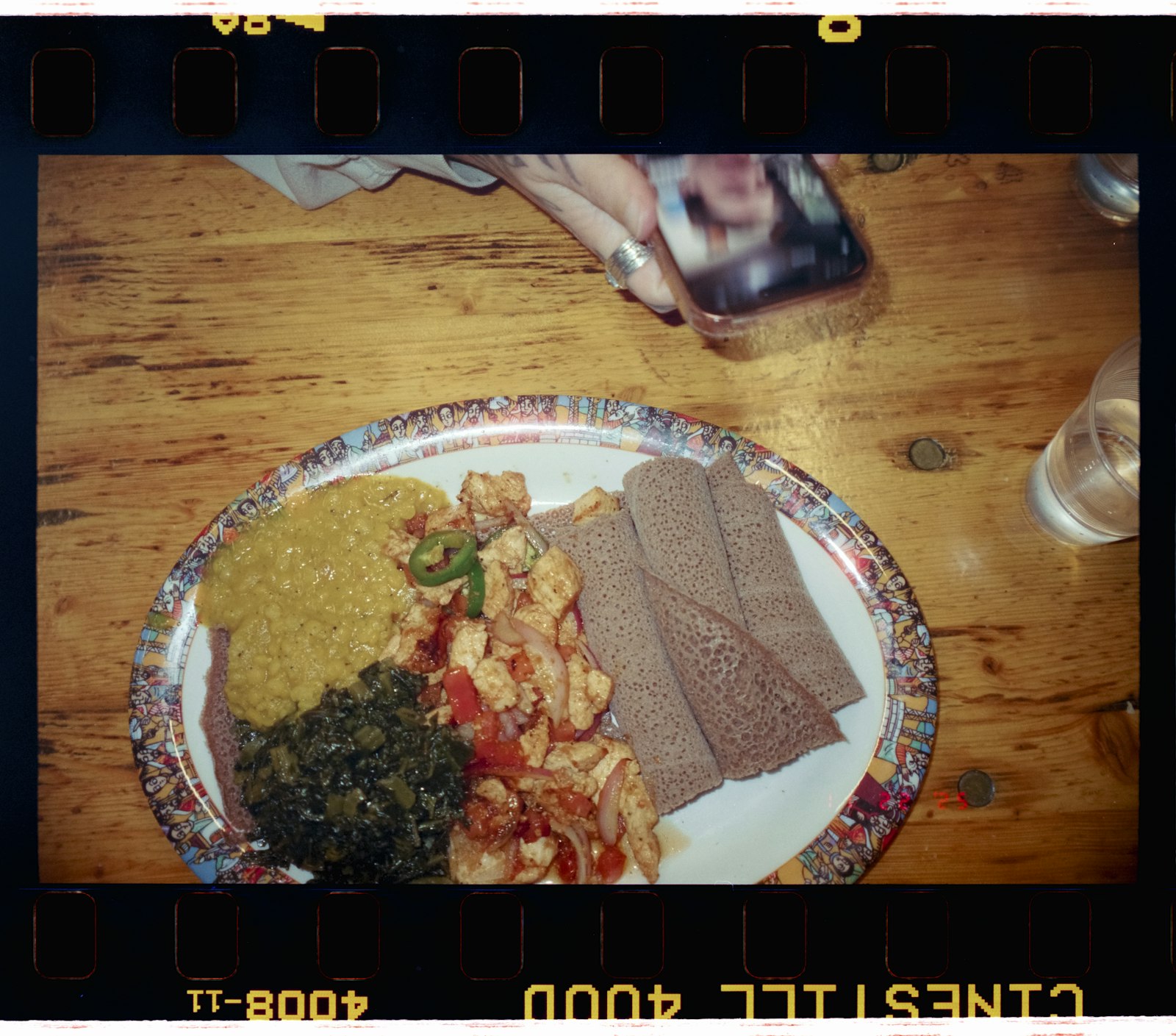
There is no more natural food partner for tella than the cuisine it was developed alongside. Ethiopian food is built on bold spices, slow-cooked stews, and the communal injera platter — and tella’s flavor profile was shaped by centuries of being poured at that same table.
Doro Wat: Ethiopia’s signature chicken stew — braised in a deeply spiced berbere sauce with hard-boiled eggs — is perhaps the ideal tella companion. The rich, slow-cooked fat of the berbere sauce meets tella’s acidity, which cuts through the richness and prevents the stew from becoming heavy. The herbal gesho notes in the beer echo and amplify the fenugreek and coriander in the berbere. This is a bridge pairing of the highest order: shared botanical compounds in the beer and the food creating a unified flavor experience.
Injera: The fermented teff flatbread on which Ethiopian food is served is itself slightly sour and yeasty, sharing a fermentation character with tella. This is a mirror pairing — like meets like — and it works because both the bread and the beer speak the same fermented-grain language. The spongy injera, used as the eating utensil as well as the plate, soaks up tella in much the same way it soaks up stew juices.
Kitfo: Ethiopia’s celebrated spiced raw beef dish, seasoned with mitmita and niter kibbeh, is one of the fattiest and most intensely flavored preparations in the cuisine. Tella’s acidity is essential here: the lactic sourness cuts the fat of the clarified butter and the richness of the raw beef, while the herbal gesho bitterness lifts the spice. Without the beer’s sourness, kitfo can feel overwhelming in quantity.
Tibs: Sautéed meat (beef, lamb, or goat) cooked with rosemary, onions, and green chilies is a classic tej bet dish — the kind of food that historically appeared alongside tella in drinking houses. The charred, savory edges of well-cooked tibs interact with the beer’s mild bitterness in the same way a sear interacts with a squeeze of lemon: contrast brings out depth.
Misir Wat (Red Lentils): The vegetarian staple of Ethiopian cooking — red lentils cooked long with berbere and onions — has a natural earthy sweetness that pairs beautifully with tella’s grain character. This is one of the best pairings for tella brewed with a higher proportion of teff, where the beer’s own earthy depth mirrors the lentils.
Beyond Ethiopian Food — Global Pairings
Tella’s flavor logic — acidic, herbal, earthy, mildly bitter — translates readily to food traditions beyond Ethiopia.
Grilled and Braised Meats: Any preparation that produces charred, umami-rich surface flavors works with tella’s gesho bitterness. Lamb kebabs, beef short ribs, spiced sausages, and jerk chicken all find a useful companion in the beer. The key is preparation with strong herbaceous or spiced seasonings — tella’s herbal character asks for complexity in the meat preparation, not just salt.
Legumes and Pulses: Lentils, chickpeas, black-eyed peas, and fava beans in any spiced preparation echo tella’s earthy grain base. Moroccan harira soup, West African groundnut stew, Indian dal makhani — all of these share a slow-cooked legume depth that pairs naturally with tella’s character.
Fermented Foods: Tella’s mild lactic sourness makes it an excellent companion for other fermented foods: aged cheeses, yogurt-dressed dishes, kimchi, miso-glazed vegetables. The shared fermentation language creates coherence rather than redundancy. A spread of Ethiopian-style fermented cottage cheese (ayib) alongside tella is one of the most elegant simple pairings in the style’s tradition.
Spiced Root Vegetables: Roasted sweet potatoes, carrots, and parsnips with warm spice blends (cumin, coriander, paprika) pair well with tella because the natural sweetness of the roots contrasts with the beer’s mild bitterness, while shared earthy undertones create common ground.
What to Avoid
Delicate White Fish and Shellfish: The earthy, resinous character of gesho overwhelms delicate seafood. Steamed sea bass, oysters, and similar preparations that call for a light, clean beer (lager, dry wit) are not served well by tella’s assertive herbal notes.
Very Sweet Dishes: Tella’s mild sourness clashes with desserts and sweet preparations. Chocolate cake, ice cream, and fruit tarts create an unpleasant contrast rather than a pleasant one. Tella does not have the residual sweetness or the dark roast character needed to anchor dessert pairings.
Dishes Dressed with Wine-Based Sauces: Red wine reductions and white wine sauces create competing flavor profiles that neither complement nor contrast tella in a useful way. The acidity sources compete rather than complement.
Vinaigrette-Heavy Salads: Though tella has lactic sourness, adding further acetic acid from vinegar dressings creates an acidic pile-up that leaves both beer and food tasting flat. Oil-dressed preparations work better.
Foods That Call for High-IBU Beers: Very bitter greens like raw radicchio, and other preparations designed to pair with aggressively hoppy beer, create a bitterness conflict with tella’s gentler, herbal gesho character rather than complementing it.
Tella and the Ethiopian Table: A Seasonal Perspective
Tella in Ethiopia is brewed and consumed year-round, but its cultural significance peaks around major religious and harvest celebrations. Timkat (Ethiopian Orthodox Epiphany, celebrated in January) and Meskel (the Finding of the True Cross, in September) are the two occasions most associated with abundant tella production and consumption. These festivals align with the dry season and post-harvest period, when grain is plentiful and communities gather to celebrate.
The post-harvest seasonal context is worth noting for food pairing purposes: tella is a natural partner for grain-forward, harvest-abundance cooking — the kinds of preparations that use freshly milled grain, dried legumes, cured meats, and preserved vegetables from the season’s surplus. Late summer and early autumn eating in any tradition — roasted root vegetables, braised lamb, fermented grain preparations — aligns naturally with tella’s profile.
Building a Tella Pairing Menu
A simple injera-based sharing meal demonstrates tella’s pairing logic across a full table:
Start: Ayib (Ethiopian fresh cheese) with green chilies and a pour of fresh tella. The acidity of the beer and the dairy’s lactic character mirror each other; the chili heat is cooled by the beer’s low ABV and mild bitterness.
Main course: A shared injera platter with doro wat, misir wat, and tibs. Pour tella throughout — the beer’s low alcohol keeps palates fresh across multiple stews and the communal injera.
Light close: Bunna (Ethiopian coffee) with a small piece of honey cake. This is where tella steps aside: Ethiopian coffee, strong and traditionally drunk in a ceremony that follows a meal, is the natural conclusion to an Ethiopian feast. Tella is not a dessert beer.
Approximate consumption at a leisurely shared meal: 2–3 glasses of tella per person over 90 minutes, at the traditional low ABV of 2–4%. This is a long-meal, session-rate beer by design.
How to Serve Tella Beer
Serving temperature: Tella is traditionally served at ambient temperature — in the Ethiopian highlands, this means approximately 15–20°C (59–68°F). For food pairing, serving at the warmer end of this range (18–20°C / 64–68°F) opens up the aroma and makes the gesho character more expressive. Avoid serving ice cold, which suppresses both the herbal gesho notes and the lactic sourness that define the style.
Traditional vessel — the birele: In tej bets (traditional Ethiopian drinking houses), tella is most commonly served in a birele (also spelled berele) — a flask-shaped glass vessel with a wide, rounded base and a narrow neck, holding approximately 250–500 ml. The rounded base means the birele is held in the hand or rested in a woven holder rather than set flat on a table. Its wide base concentrates the aroma at the opening, which is well-suited to a beer where herbal and earthy nose are central to the experience. A birele-style flask glass is the most authentic vessel for serving tella.
In home settings and rural areas, tella is traditionally drunk from handleless clay cups — a simpler vessel with the same functional logic of wide opening and ambient temperature retention. A clay cup or ceramic bowl works well as a home alternative.
Modern substitute: A wide-mouth ceramic mug or a short, tumbler-style glass works well when neither a birele nor clay cups are available. The wide opening allows the herbal gesho aroma to express fully. A Weizen glass, tulip, or tall pint glass are less appropriate — they direct aroma away from the nose or create an association with very different styles.
What to avoid: Do not serve tella in a frosted glass — the extreme cold suppresses aroma and bitterness, stripping the beer of its defining character. Avoid very tall glasses that present the beer as highly carbonated when it is not.
Pouring: Pour gently from the serving vessel, tilting the receiving cup to minimize disturbance of the yeast sediment if you want a clearer pour. Tella is sometimes poured deliberately cloudy (allowing the sediment to mix in) — both approaches are traditional and acceptable, with the cloudy pour giving a more nutritious, yeasty result. There is no formal head formation in tella; a thin ring of foam is typical.
Tella’s food pairing logic is the same as its social logic: it is a beer designed for sharing, for long meals, for food with complexity and depth. Ethiopian cuisine, with its bold spices, fermented elements, and communal serving traditions, is its natural home — but the gesho-bittered grain character travels well to any cuisine that prizes earthiness, herbal bitterness, and fermented flavor.
Explore more: – What is Tella Beer? The Complete Style Guide → – How to Brew Tella Beer at Home →
Brew Cartographer explores the history, geography, and craft of rare and forgotten beer styles. Subscribe to our newsletter for new expeditions every week.