What is cerveja preta? The literal translation — “black beer” — barely scratches the surface of a style that has quietly survived on two archipelagos far out in the Atlantic Ocean while the mainland Portuguese brewing industry collapsed into two dominant brands. On Madeira and the Azores, cooperatively-owned island breweries kept dark lager traditions alive not through nostalgia or craft revival, but through simple geographic stubbornness: the ocean made consolidation difficult, and islanders had preferences that the mainland giants never fully honored.
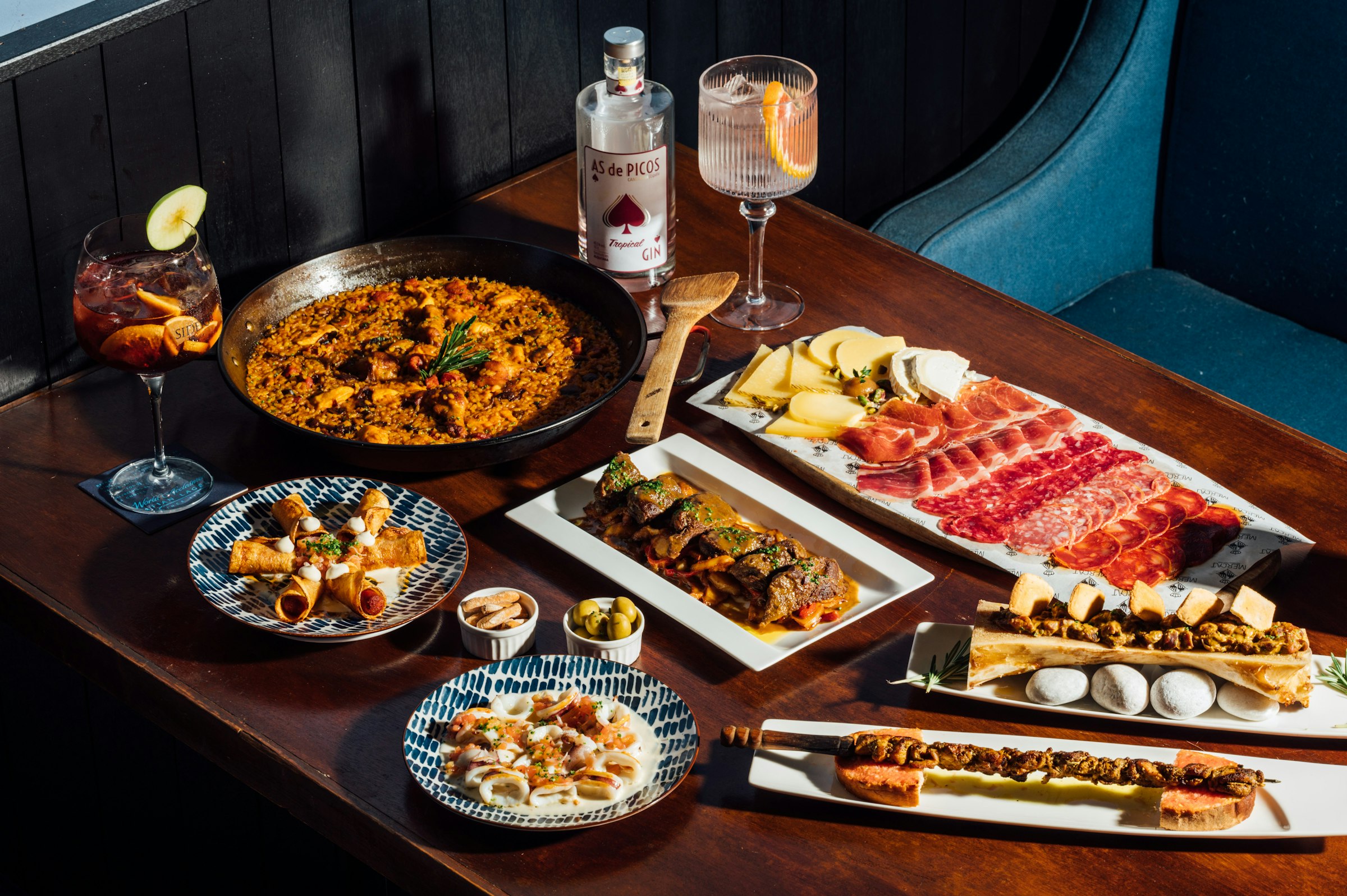
This expedition maps the history, character, and commercial examples of cerveja preta — a dark, malty Atlantic lager with a genuinely distinct regional identity. If you want to brew it yourself, visit our How to Brew Cerveja Preta at Home → guide. For food and serving suggestions built around island cuisine, see our Cerveja Preta Food Pairing Guide →.
The Geography: Two Archipelagos, One Tradition
Cerveja preta is fundamentally an island product, and the Atlantic Ocean is as much an ingredient as any malt or hop. Madeira sits roughly 400 miles west of the Moroccan coast and 870 miles southwest of Lisbon — close enough to Portugal in language and culture, far enough to develop its own culinary and brewing identity. The Azores, a nine-island chain scattered across the mid-Atlantic some 930 miles west of the Portuguese coast, are even more isolated. Both archipelagos belong to Portugal politically, but the logistics of supply and the realities of island economics have always pushed local producers toward self-sufficiency.
Funchal, Madeira’s capital, is the beating heart of the island’s brewing tradition. The Empresa de Cervejas da Madeira (ECM) — the Madeira Beer Company — has been producing beer here since 1872, making it one of the oldest continuously operating breweries in Portugal. The ECM’s flagship dark lager, sold under the Coral brand, has become so embedded in Madeiran culture that ordering a “preta” in a Funchal bar requires no further explanation. On the Azores, the Melo Abreu operation on Terceira Island fills a similar role, representing the local taste for something darker and more characterful than the pale lagers that dominate the mainland.
What geography gave these breweries was not just isolation but insulation. When Sagres and Super Bock — the two mainland giants that together dominate over 90% of the Portuguese beer market — expanded through acquisition and aggressive distribution deals in the latter half of the twentieth century, the island markets proved logistically inconvenient and culturally resistant. Islanders already had their beer, they knew it, and shipping costs made mainland products less competitive than the mainland producers expected.
The History: Island Breweries That Refused to Disappear
Portuguese brewing history follows the European industrial pattern with one important wrinkle: the country industrialized its beer industry relatively late, and when it did, two giants emerged that left almost no room for regional producers. The mainland’s story by the mid-twentieth century was essentially a two-brewery story. The island story was different.
Empresa de Cervejas da Madeira was founded in 1872 by a consortium of local merchants who recognized that importing beer from the mainland or from continental Europe was expensive and unreliable. The cooperative model — with ownership distributed among island stakeholders rather than concentrated in a single family or outside corporation — gave the brewery a structural resilience that many mainland producers lacked. When consolidation pressure came, there was no single owner to buy out and no board incentivized to sell. The ECM continues to operate under this model today.
The Coral brand emerged from ECM as the brewery’s primary identity in the twentieth century, and the dark lager — the “Preta” — became its signature alongside a pale lager. The deliberate retention of the dark style is significant: dark lagers had largely disappeared from the Portuguese mainland by the latter half of the twentieth century, squeezed out by the pale, clean, accessible lagers that Sagres and Super Bock perfected for mass-market appeal. On Madeira, the preta survived because there was enough of a local market to sustain it, and because the brewery’s cooperative ownership gave it no incentive to chase mainland trends.
The Azores have their own parallel tradition. Terceira Island’s status as a mid-Atlantic waypoint — historically important for trans-Atlantic shipping and later for the American military presence at Lajes Field — gave the island a cosmopolitan character unusual for its size, and local producers reflected this in maintaining a range of styles that the mainland had pared down to near-uniformity.
Neither island tradition has been untouched by modernity, but both have maintained the dark lager as a living product rather than a heritage curiosity. The preta continues to outsell the pale on its home islands in certain contexts — a reversal of the mainland pattern that speaks to how deeply the style is woven into local food culture.
What is Cerveja Preta? Taste, Aroma, and Appearance
Appearance: Cerveja preta pours a deep mahogany to near-black, typically with ruby highlights visible when held to light. The head is off-white to cream, moderate in height, with good retention. Clarity is excellent — this is a lagered beer, and the weeks of cold conditioning produce the characteristic bright appearance of the style.
Aroma: The nose is led by roasted malt character — dark bread, milk chocolate, and a subtle hint of coffee — without the sharp roast edge of a stout or porter. There is a gentle sweetness underneath, reminiscent of toffee or light molasses, and a very low hop presence that provides background support without calling attention to itself. Some examples carry a faint caramel note.
Flavor: The palate confirms the aroma’s promise: roasted malt up front, transitioning through a mid-palate sweetness that keeps the roast from turning harsh, and finishing with a clean, dry lager finish. Bitterness is moderate and restrained — enough to provide balance and prevent cloying, not enough to dominate. The lagering process contributes a smoothness and roundness that distinguishes cerveja preta from ales with similar roast profiles.
Mouthfeel: Medium-bodied with moderate carbonation. The lager conditioning gives the mouthfeel a characteristic crispness that cuts through the roast and makes the beer more refreshing than its dark color suggests. It is an approachable dark beer — not a sipping beer demanding contemplation, but one that works equally well with a meal.
ABV: Typically in the range of 4.6%–5.2%, keeping the style squarely in the session-friendly zone despite its robust flavor profile.
Cerveja preta sits closest to the BJCP category 8B: Schwarzbier — a dark German lager style defined by roasty but not harsh malt character and a clean lager finish. The Portuguese island versions are close enough to this template to be useful for orientation, though they carry a slightly softer roast character and a warmer Atlantic identity that distinguishes them from their German cousins.
The Ingredients That Make Cerveja Preta Unique
The grain bill of a cerveja preta follows the dark lager template: a base of Pilsner or pale lager malt providing the fermentable backbone, with roasted malts — typically Carafa, chocolate malt, or dark Munich — adding color and character. The distinctive quality of the island versions comes less from any single exotic ingredient than from the balance: roast used for depth without bitterness, and a malt sweetness that keeps the beer accessible and food-friendly.
Water chemistry on the Atlantic islands tends toward soft to moderately hard, which suits the dark lager style well. Soft water allows the roasted malt character to express cleanly without the mineral harshness that harder water can introduce. This is a beer style that depends on process and balance more than on unusual ingredients — the art is in the lagering, the conditioning, and the measured use of dark malt.
Hops in cerveja preta are functional rather than expressive. Traditional European noble varieties — Saaz, Hallertau, and similar — provide a low-to-moderate bitterness and a clean, herbal background presence. The hop profile is intentionally restrained; this is a malt-forward style, and the hops serve balance rather than character.
Commercial Examples Worth Seeking Out
- Coral Preta (Empresa de Cervejas da Madeira, Madeira, Portugal): The most historically significant example of the style — produced continuously since the ECM’s dark lager tradition was established in Funchal. Clean, malt-forward, with chocolate and light coffee notes and the characteristic smooth finish of a well-conditioned lager. The definitive reference point for cerveja preta. Available on Madeira and through Portuguese specialty importers.
- Super Bock Stout (Super Bock, Matosinhos, Portugal): The mainland’s closest approximation — a dark lager marketed as a “stout” but similar in character to the island cerveja preta tradition, produced by one of the mass-market giants that displaced most regional Portuguese brewing. More widely available internationally than island examples and useful as an accessible reference, though it lacks the distinctive character of the ECM original.
- Sagres Preta (Sociedade Central de Cervejas, Portugal): The other mainland giant’s dark offering. Widely distributed in Portugal and increasingly found in Portuguese communities internationally. A reasonable introduction to the style for those outside Madeira and the Azores, though a simplified version of the island originals.
- Köstritzer Schwarzbier (Köstritzer Schwarzbierbrauerei, Bad Köstritz, Germany): The canonical Schwarzbier — the closest internationally available reference point for what cerveja preta aspires to in its clean, roasty-but-smooth dark lager character. Not a Portuguese beer, but invaluable as a benchmark for exploring the style.
- Kulmbacher Mönchshof Schwarzbier (Kulmbacher Brauerei, Kulmbach, Germany): Another excellent Schwarzbier reference — malt-forward, rounded, and approachable. Useful for understanding the dark lager template that cerveja preta shares and adapts to its Atlantic context.
How Does Cerveja Preta Compare to Similar Styles?
Cerveja preta’s closest relative in the global beer lexicon is Schwarzbier — the German dark lager from Thuringia and Saxony that gave the world examples like Köstritzer. The comparison is accurate and useful: both are dark, clean lagers with roasted malt character and low-to-moderate bitterness, both rely on the lagering process for smoothness, and both are more approachable than their dark color suggests to newcomers.
The differences are subtle but real. German Schwarzbier tends toward a drier finish and a slightly sharper roast edge — the result of traditional German brewing water chemistry and a historic preference for a crisper finish. Cerveja preta from the Atlantic islands tends toward a softer roast and a slightly fuller mid-palate sweetness. These are family resemblances, not divergences — think of them as cousins who grew up speaking the same language in different places.
Against a Munich Dunkel, cerveja preta is notably more roast-forward. The Dunkel emphasizes rich, bready Munich malt sweetness with chocolate as a subtle undertone; the preta leads with the roast character and uses sweetness as a moderating influence rather than the primary flavor driver. Against stouts and porters — the dark ales that many drinkers reach for when they want roast character — cerveja preta is lighter, crisper, and considerably less bitter. The lager conditioning is the decisive difference: it produces a cleanness and refreshing quality that no dark ale can replicate.
Cerveja preta is a survivor — a style that endured not through romantic revival or craft-beer nostalgia, but through the stubbornness of island communities that knew what they liked and had the cooperative institutions to keep making it. That resilience is worth raising a glass to, and the style itself — smooth, roasty, refreshing, and deeply connected to its Atlantic home — repays the effort of seeking it out.
Ready to go deeper? – How to Brew Cerveja Preta Beer at Home → – Cerveja Preta Beer Food Pairing Guide →
Brew Cartographer explores the history, geography, and craft of rare and forgotten beer styles. Subscribe to our newsletter for new expeditions every week.