What is Australian Sparkling Ale? It is one of the few surviving indigenous beer styles of the Southern Hemisphere — a naturally bottle-conditioned, top-fermented ale that has been brewed continuously in South Australia since 1862, a living relic of the colonial brewing traditions that shaped a continent’s drinking culture.
Australian Sparkling Ale occupies a singular place on the world beer map — a style that nearly every other country has no equivalent for, kept alive almost entirely by one family-owned brewery through hostile takeover attempts, the rise of industrial lager, and more than 160 years of change. This expedition covers the geography, history, sensory character, and commercial examples of this extraordinary style. If you want to brew it yourself, see our How to Brew Australian Sparkling Ale at Home guide. For food pairing, see the Australian Sparkling Ale Food Pairing Guide.
The Geography: Adelaide, South Australia
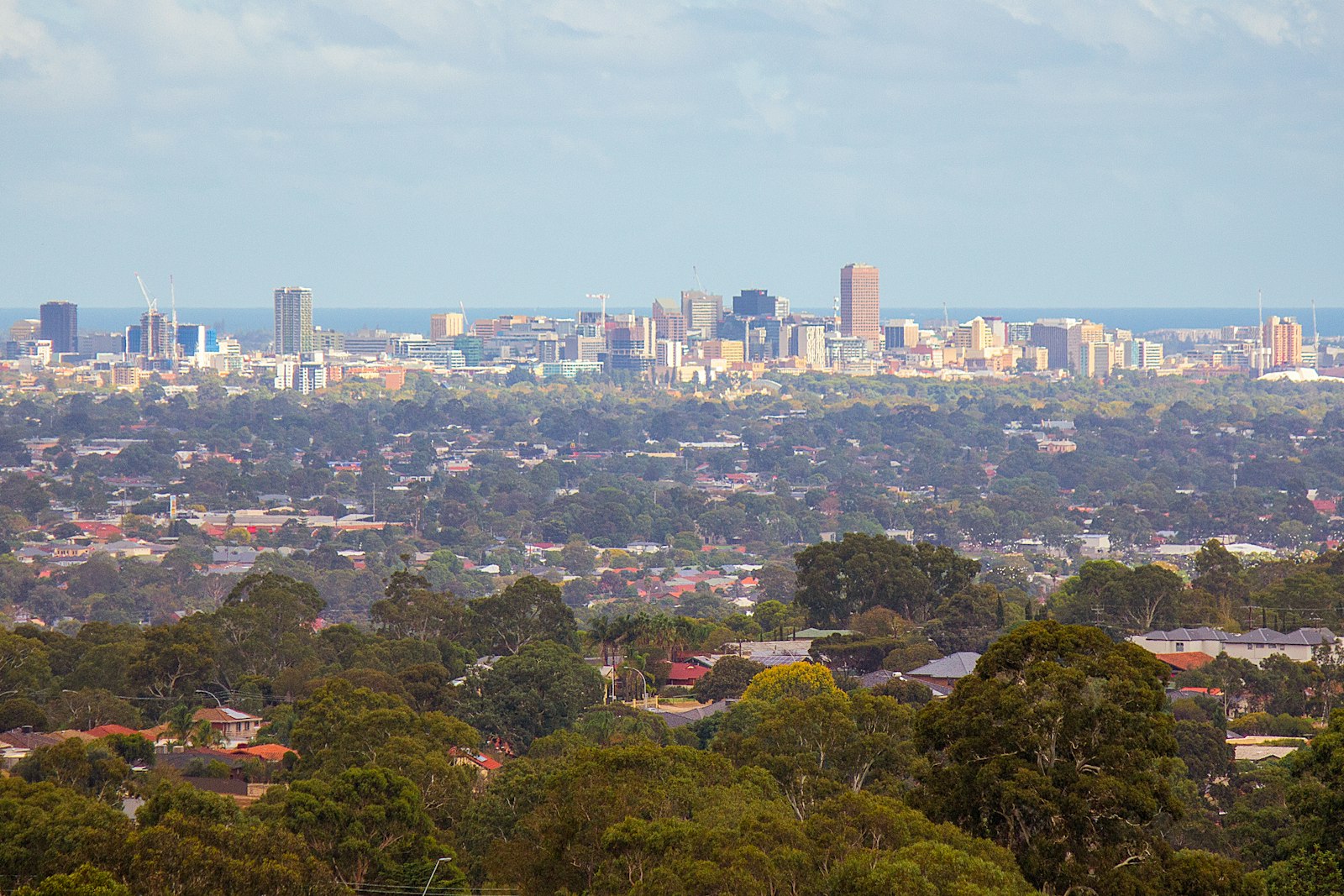
Any serious map of Australian beer culture has a single point of origin for this style: Adelaide, the capital of South Australia, sitting on the coastal plain between the Mount Lofty Ranges and Gulf St Vincent. The city was founded in 1836 as a planned free colony — notably, one that was never a penal colony — and it attracted a disproportionate share of skilled tradesmen, religious nonconformists, and entrepreneurs from Britain and Germany.
This demographic mix matters for beer history. The Germans brought lager brewing traditions to the Barossa Valley just east of Adelaide, but the British nonconformists — particularly the Methodists and Congregationalists — brought ale-brewing practices from the English Midlands and Yorkshire, where top-fermented ales with natural carbonation were standard. Adelaide’s climate, ranging from cool wet winters to scorching dry summers, presented challenges to both traditions, but ale fermentation proved more forgiving of the heat, especially for brewers without refrigeration technology.
South Australia developed a distinct regional beer culture as a result. While the eastern states of Victoria and New South Wales gravitated toward cold-fermented lagers after refrigeration became available in the 1880s, South Australian brewers maintained a stronger attachment to ale traditions. The result, over generations of refinement, was a style specifically adapted to Australian conditions: well-attenuated to survive the heat, highly carbonated to remain lively in the glass, and bottle-conditioned to allow for natural secondary fermentation without expensive carbonation equipment.
The History: One Brewery, 160 Years, and a Near-Miss
The story of Australian Sparkling Ale is, almost entirely, the story of Coopers Brewery. Thomas Cooper arrived in Adelaide from Yorkshire, England in 1852. The details of how he came to brewing are part of the brewery’s founding mythology: the story goes that his wife Ann, born into a brewing family, prepared a bottle of ale for a sick neighbor, and the neighbor recovered so dramatically that demand for the remedy grew beyond what a farmhouse operation could supply. Whether medicinal or simply delicious, Cooper’s ale found a market.
By 1862, Thomas Cooper had established a commercial brewery in the Adelaide suburb of Leabrook. He was a Methodist lay preacher who reportedly saw no contradiction between his faith and his trade — the ale he made was a food product, a source of nutrition, and a safer alternative to the contaminated water that had made him ill on his voyage from England. His brewery grew steadily through the late nineteenth century, surviving competition from both German lager brewers and from larger, better-capitalized ale breweries in the eastern states.
What made Coopers survive while dozens of rivals did not was a combination of factors that look, in retrospect, like fortunate conservatism. The brewery retained its top-fermenting yeast strains and bottle-conditioning methods while competitors switched to filtered, force-carbonated lagers in the early twentieth century. Coopers’ naturally conditioned ales had a shelf life and a flavor profile that distinguished them clearly from the mainstream — and a devoted following among South Australians who regarded the style as a local birthright.
The twentieth century was not straightforward. Coopers faced repeated pressure from larger competitors — including Swan, Carlton & United, and various international brewing conglomerates — to sell or merge. The most dramatic challenge came in 2005, when Lion Nathan, a publicly listed Australasian brewing company with Kirin Holdings of Japan as its major shareholder, launched a hostile takeover bid after acquiring a significant stake in Coopers shares. The Cooper family, which had maintained family ownership through careful share management, fought the bid aggressively. In a remarkable outcome for Australian industrial history, Coopers restructured its ownership and listed on the Australian Stock Exchange in 2006 in a way that effectively locked out outside acquisition, preserving family ownership. The style survived because the people who make it refused to stop.
The brewery relocated from Leabrook to a purpose-built facility in Regency Park in 2001, dramatically expanding production while maintaining the core brewing methods. Today, Coopers is Australia’s largest Australian-owned brewery, producing Sparkling Ale as its flagship product alongside a range of ales and lagers.
What is Australian Sparkling Ale? Taste, Aroma, and Appearance
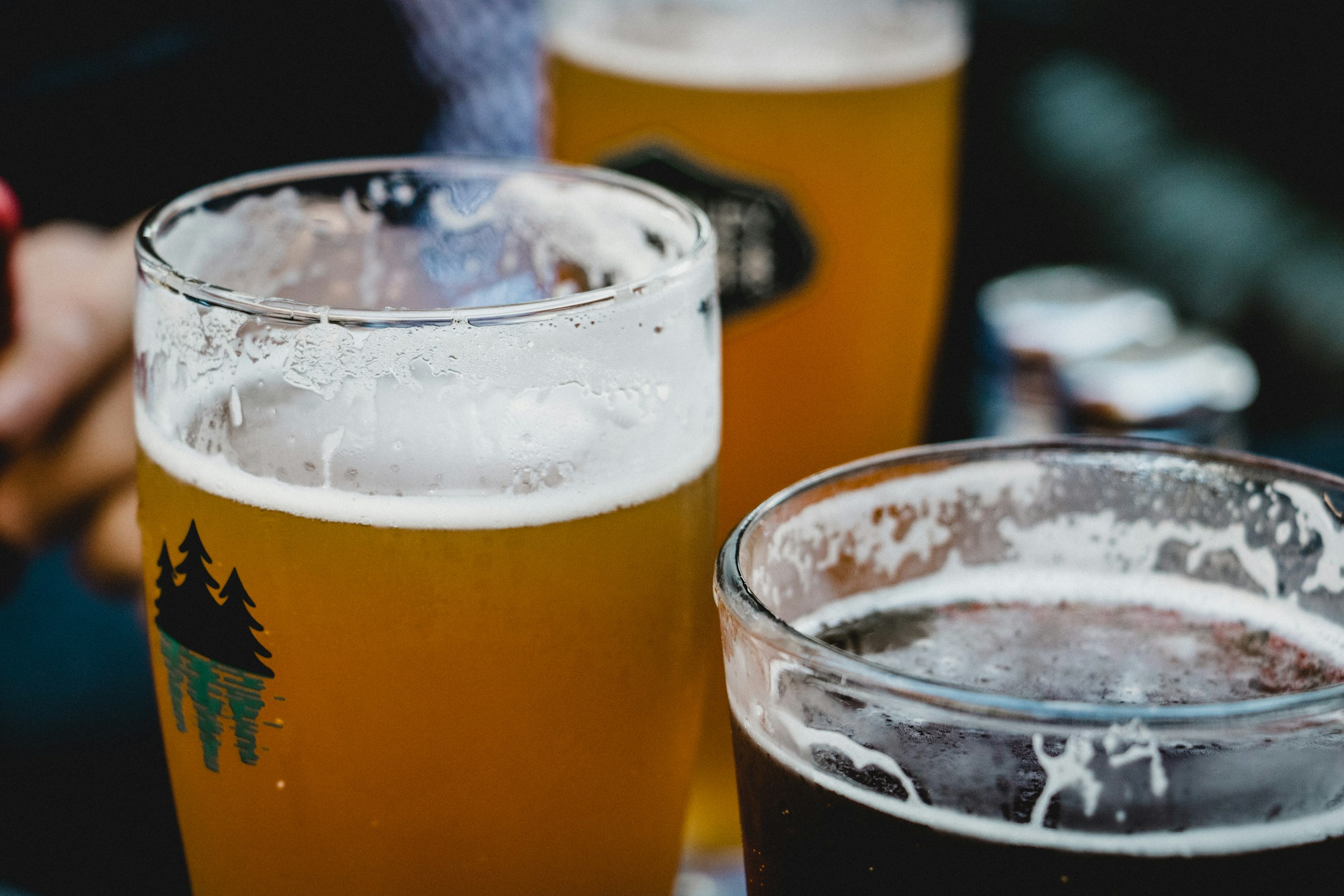
Appearance: Australian Sparkling Ale is a distinctive-looking beer. Poured carefully — leaving the yeast sediment in the bottle — it appears a clear to hazy pale gold to light amber. Poured in the traditional “roll and pour” fashion, which rouses the yeast before pouring, it becomes a cloudy, almost opaque golden amber. In either case it carries a fine white head with good retention, driven by the high natural carbonation. The carbonation itself is notably fine-bubbled, a characteristic of bottle-conditioned beers fermented with live yeast.
Aroma: The yeast character is prominent and entirely intentional. Expect fruity esters — green apple, pear, and sometimes peach — alongside a bready, slightly biscuity malt base. Hop aroma is restrained, contributing a mild earthy or herbal note rather than any assertive bitterness. There is often a faint yeasty sulfur note, especially in fresh examples, which disperses quickly and is considered part of the style’s character.
Flavor: The palate is dry and surprisingly refreshing for a beer this complex. Moderate malt sweetness at the front gives way quickly to fruity ester flavors — the apple and pear notes carry through — and a clean, moderately bitter finish. The hop bitterness is present but not aggressive, serving primarily to dry the finish rather than provide aromatic character. The yeast, whether present as sediment or not, adds a yeasty, slightly acidic complexity that is central to the style’s identity.
Mouthfeel: Medium-light to medium body with high carbonation. The carbonation is a defining feature — it is livelier than most ales, closer to a German wheat beer or Belgian saison in its effervescence, with a palate-scrubbing quality that makes it more food-friendly than its modest ABV might suggest.
ABV: 4.5–6.0%, with Coopers Sparkling Ale sitting at 5.8%.
In the 2021 BJCP guidelines, Australian Sparkling Ale is classified as Category 12B: Australian Sparkling Ale, within the broader Pale Commonwealth Beer group.
The Ingredients That Make Australian Sparkling Ale Unique
Australian Sparkling Ale draws on ingredients and processes that reflect both its British origins and its adaptation to Southern Hemisphere conditions.
The grain bill is built around Australian pale ale malt — two-row barley grown in the southern Australian states, which tends toward a clean, slightly bready profile without the pronounced biscuit character of British pale malts. Historically, Coopers and other South Australian breweries used a proportion of sugar adjuncts — cane sugar or brewing sugar — to lighten the body and aid attenuation, a practice more common in Australian and English brewing than in German or American traditions.
Hops are a revealing element. The traditional Australian hop variety is Pride of Ringwood, a high-alpha acid variety developed by Carlton & United Breweries in Victoria in the 1960s from crosses of English varieties, and released commercially around 1965. Pride of Ringwood is not the most fashionable hop in the craft beer era — its character is coarse and herbal compared to the tropical fruit notes of modern varieties — but it is historically authentic to the style and contributes a distinctive earthy bitterness that is quite different from the Saaz-dominated character of Czech lager or the citrus notes of American pale ales. Some modern iterations use more neutral bittering hops.
The yeast is perhaps the most critical ingredient. Coopers maintains a proprietary yeast strain that is highly flocculent, producing the firm cake that settles at the bottle base, and strongly fruity — the apple and pear esters that define the style’s aroma. The strain ferments warm by lager standards (around 20°C / 68°F) and attenuates aggressively, producing the dry finish that defines the style.
Commercial Examples Worth Seeking Out
- Coopers Sparkling Ale (5.8% ABV) — The original and the definitive example. Brewed continuously since 1862, bottle-conditioned with live yeast, immediately recognizable by the cloudy amber pour if you rouse the bottle before serving. Available throughout Australia and in specialist beer retailers internationally. Everything else in this style is measured against it.
- Coopers Pale Ale (4.5% ABV) — A lower-ABV sibling from the same brewery, bottle-conditioned in the same tradition. Slightly less estery than the Sparkling, with a more restrained yeast character. Widely exported and often the first Coopers product available in international markets.
- Nail Brewing Australian Pale Ale (5.0% ABV) — A Western Australian interpretation of the broad Australian pale ale tradition. Demonstrates how the style’s character can be expressed with more modern hop varieties.
- Prancing Pony Amber Ale (5.4% ABV) — A South Australian craft interpretation of a bottle-conditioned ale, from a brewery in the Barossa Valley that leans into the region’s ale heritage.
- Coopers XPA (Extra Pale Ale, 4.2% ABV) — A more recent filtered release from Coopers, lower in ABV and without the bottle-conditioning of the flagship Sparkling Ale, but reflecting the brewery’s continued commitment to the pale ale tradition with a cleaner, more modern profile.
How Does Australian Sparkling Ale Compare to Similar Styles?
Australian Sparkling Ale is often puzzling to drinkers who encounter it for the first time, because it resembles several styles without belonging cleanly to any of them.
Compared to English Pale Ale or Bitter, it shares the top-fermented, estery yeast character but is drier, more highly carbonated, and — when poured traditionally — cloudier due to the live yeast. English ales at this ABV are typically cask-conditioned and served at cellar temperature; Australian Sparkling Ale is bottle-conditioned and served cold.
Compared to Hefeweizen, it superficially resembles a cloudy, estery pale ale, but lacks the banana and clove character driven by Weizen yeast’s isoamyl acetate and 4-vinylguaiacol production. The fruitiness of Australian Sparkling Ale reads more as apple and pear from ester production, not the phenolic-plus-fruity Hefeweizen profile.
Compared to Saison, there is a family resemblance in the dry, effervescent, yeast-forward character, but Saisons tend toward more complex spice and phenolic notes; Australian Sparkling Ale is cleaner and less rustic.
It is most accurately described as a style unto itself: a bottle-conditioned pale ale adapted for Australian conditions, with a yeast character and degree of attenuation not found in any equivalent style.
The persistence of Australian Sparkling Ale through more than 160 years of brewing consolidation, imported fashion, and industrial lager dominance is one of the more remarkable stories in world beer geography. A single family, a single city, a single proprietary yeast strain, and a community of drinkers who never stopped wanting the real thing — that is what it takes to keep a style alive.
Ready to go deeper? – How to Brew Australian Sparkling Ale Beer at Home → – Australian Sparkling Ale Beer Food Pairing Guide →
Brew Cartographer explores the history, geography, and craft of rare and forgotten beer styles. Subscribe to our newsletter for new expeditions every week.