Happoshu beer food pairing rewards a different kind of thinking than you might bring to more assertive styles — this is a beer defined by restraint, and the best pairings work with that restraint rather than against it. Happoshu is clean, highly carbonated, lightly bitter, and finishes very dry; at the table, it functions as the culinary equivalent of a freshly pressed white napkin — a neutral backdrop that lets food speak while quietly doing important work. That work, as it turns out, is considerable.
Affiliate disclosure: This article contains affiliate links. If you purchase through these links, Brew Cartographer earns a small commission at no extra cost to you.
This guide covers the flavor principles that make happoshu a surprisingly useful food companion, the specific foods and dishes it pairs with best, what to avoid, and how to serve it properly — including glassware, temperature, and pouring technique. For the full story of the style’s origins, see What is Happoshu Beer? →. If you want to brew your own batch at home, the How to Brew Happoshu Beer at Home → guide has the complete recipe.
The Flavor Principles Behind Happoshu Pairing
Happoshu is not trying to be the star of the meal. Its lightness — the very quality that makes it seem underwhelming when sipped in isolation — becomes an asset when food enters the picture. Understanding the three mechanisms at work helps you pair it intelligently.
Carbonation as palate cleanser. Happoshu’s assertive carbonation is its most powerful pairing tool. CO₂ bubbles physically lift fat and oil from the palate, scrubbing each bite clean and resetting the palate for the next one. This is why highly carbonated beers — especially light ones — are such natural companions to fried and fatty foods. The bubbles don’t just tickle; they actively work.
Low bitterness and low malt sweetness. Unlike a hoppy IPA or a malty amber, happoshu makes almost no flavor impositions on food. Its IBU range of 10–25 provides enough bitterness to balance light sweetness from food but not enough to clash with delicate flavors. This makes it one of the most food-versatile beers available — a characteristic it shares with Champagne and other high-carbonation, low-assertive drinks. You can bring happoshu to the table without worrying that it will overwhelm what you’re eating.
Dry finish and refreshment. The high attenuation of happoshu — finishing very dry, often below 1.008 — means there is no residual sweetness to compete with umami-rich dishes or salty foods. A dry beer at the table extends the life of each bite; a sweet one would tire the palate. With happoshu’s clean dry finish, you simply want another sip, and another forkful.
Acidity (very mild) and perceived crispness. While happoshu is not an acidic beer in the way that a Gose or Berliner Weisse is, its carbonation creates a perception of crispness that functions similarly to mild acidity in pairing. It brightens food without introducing sourness, and it cuts through coating fats in a way that a flat, lower-carbonation beer cannot.
Izakaya Classics — The Natural Home Territory
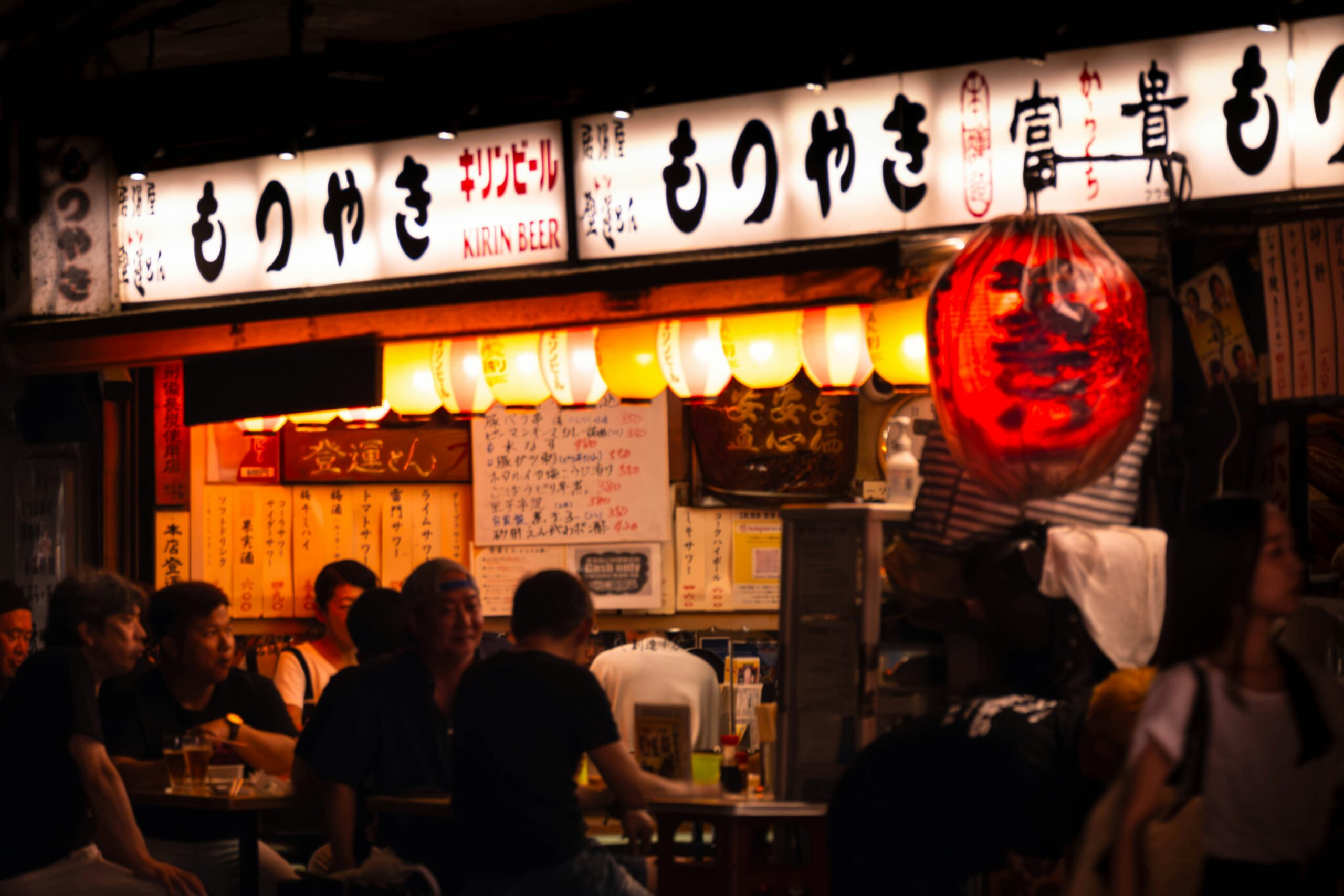
Happoshu was born to be drunk in izakayas — Japanese casual drinking establishments where small dishes arrive continuously and the beer is expected to refresh, not dominate. This is its home territory, and the pairing logic of izakaya food maps perfectly to happoshu’s character.
Karaage (Japanese fried chicken): This is the archetype happoshu pairing. Karaage is fried in a light coating with ginger and soy, producing chicken that is juicy inside and crisp outside with a coating of cooking oil. Happoshu’s carbonation cuts through the fat and the dry finish resets the palate between pieces. The beer’s mild bitterness echoes the savory depth of the soy without competing with it. If you could design a pairing to demonstrate what happoshu does well, karaage would be it.
Edamame: One of the simplest and most satisfying pairings in Japanese beer culture. The slightly grassy, vegetal quality of lightly salted edamame mirrors the faint grain character of happoshu; the salt in the beans amplifies the beer’s mild hop bitterness and makes it taste more substantial than it is.
Yakitori (grilled chicken skewers): The char on yakitori — particularly tare-glazed varieties with their sweet-salty caramelized coating — pairs beautifully with happoshu’s dry, clean finish. The beer provides a counterbalancing freshness to the richness of the glaze without overwhelming the delicate smokiness of the charcoal grill.
Gyoza (pan-fried dumplings): Pan-fried gyoza has three things that call for happoshu: a crisp fried bottom, a chewy wrapper, and a savory pork-and-cabbage filling seasoned with garlic and ginger. The carbonation handles the fat; the dry finish handles the garlic. With a dipping sauce of soy, rice vinegar, and chili oil, the combination is one of the great simple pleasures of Japanese food and beer culture.
Seafood — Where Happoshu Really Earns Its Place
Sushi and sashimi: The case for happoshu alongside raw fish is straightforward. Sake is the traditional companion, but happoshu’s neutrality and carbonation give it a similar role — clean and refreshing, neither overwhelming the fish’s delicate flavor nor introducing competing aromatics. With fatty fish like salmon or mackerel, the carbonation provides a useful counterpoint; with leaner cuts like flounder or sea bass, happoshu simply gets out of the way.
Grilled fish (shioyaki): Salt-grilled fish — whole fish rubbed simply with salt and cooked over high heat — is one of the most unadorned preparations in Japanese cooking. Happoshu is equally unadorned. The pairing is a study in alignment: clean beer, clean fish, each making the other seem a little brighter. The beer’s carbonation lifts any oiliness from the skin; its low bitterness doesn’t interfere with the delicate, slightly sweet flesh.
Tempura: Tempura’s legendary lightness — the batter should be barely there, a whisper of crunch — needs a beer that won’t overwhelm it. A heavier, maltier lager would seem clumsy next to well-made tempura; happoshu’s lightness is exactly right. The carbonation scrubs the minimal oil from the palate and lets the natural sweetness of the shrimp or vegetable filling come forward.
Clams and shellfish: Whether steamed, in miso soup, or cooked in sake and butter, clams and happoshu share a briny, oceanic territory. The beer’s mild bitterness and dry finish complement the salinity and umami of shellfish without competing.
Beyond Japan — Broader Pairing Territory
Happoshu’s neutrality means its pairing logic extends well beyond Japanese cuisine to any food that benefits from a refreshing, palate-cleansing companion.
Vietnamese food: Pho, bun bo hue, banh mi, and Vietnamese spring rolls all pair naturally with happoshu. The fresh herbs, lime, and chili that characterize Vietnamese cooking need a beer that won’t crowd them out, and happoshu’s lightness obliges. The carbonation handles the richness of pork bone broth; the dry finish lets lemongrass and fish sauce shine.
Light salads and dressed vegetables: A lightly dressed green salad, a sunomono (Japanese cucumber and vinegar salad), or a simple coleslaw all align with happoshu. The shared delicacy of flavors and the beer’s carbonation-as-freshness create a pairing built on complementary lightness.
Mild cheeses: Fresh mozzarella, mild ricotta, or young goat cheese pair better with happoshu than stronger aged varieties. The logic is the same as with delicate seafood — the beer’s neutrality is a virtue when the food itself is subtle.
What to Avoid
Heavily spiced or chili-heavy dishes: Happoshu’s low bitterness and high carbonation can actually amplify the heat perception from chili. Unlike a malty beer that might soothe capsaicin, happoshu provides no buffer and may make very spicy food seem more intense. Better options: opt for a slightly maltier lager or a milk-based drink with very spicy food.
Rich, fatty stews and braises: Happoshu lacks the malt depth to stand up to the richness of beef stew, lamb tagine, or heavily sauced braises. The beer will seem watery alongside these dishes, and the food will overwhelm it. A darker, maltier beer is a far better companion.
Strong aged cheeses: A washed-rind Époisses, a well-aged cheddar, or a blue cheese will simply overpower happoshu. The beer disappears. Choose a more characterful companion — or serve the beer separately.
Very sweet desserts: Happoshu is dry, and very sweet food next to a dry beer can make the beer taste bitter or thin. If you want to drink beer with dessert, reach for something with residual sweetness of its own.
Heavily smoked or very complex umami dishes: While happoshu works with lightly seasoned grilled food, intensely smoked meats or deeply complex umami preparations (think long-braised kakuni pork belly in a heavily reduced sauce) can make happoshu seem blank. The beer needs food that matches its register of subtlety.
A Seasonal Perspective
Happoshu is quintessentially a warm-weather beer — an observation that partly explains its cultural role in Japan, where summer heat and the ritual of cold beer are deeply connected. At a summer hanami (cherry blossom viewing picnic), at a backyard barbecue, or at the beach, happoshu’s refreshment function is at its most valuable.
In summer, pair it with cold soba noodles with dipping sauce, lightly pickled vegetables (tsukemono), cold tofu with ginger and soy, and grilled corn. These foods share happoshu’s register of clean freshness and amplify its best qualities. In cooler months, happoshu makes more sense alongside lighter hot dishes — a bowl of ramen with a clean shio (salt) broth rather than a heavy miso one, or delicate oyako-don (chicken and egg on rice) rather than the heartier katsu curry.
How to Serve Happoshu Beer
Serving temperature: Happoshu is best served cold — 2–5°C (36–41°F). This is colder than most European lagers are optimally served, and the cold temperature is part of what defines happoshu’s refreshment character. For food pairing, you can allow it to warm very slightly to 5–7°C (41–45°F), which opens a small amount of additional aroma and softens the carbonation marginally, making it slightly more accommodating to food. Do not serve at ale temperatures — warmth exposes happoshu’s light body in an unflattering way.
Glassware: In Japanese izakayas — the cultural home of happoshu — the traditional vessel is the jokki (ジョッキ), a handled glass mug available in large (dai), medium (chu), and small (sho) sizes. The jokki is functional and unpretentious, which suits happoshu perfectly: this is not a beer of ceremony. At home or in Western settings, a standard lager glass or pilsner glass (affiliate link) — tall, slightly tapered, clear — is the right choice; it shows off the carbonation and pale color to their best advantage. Whichever vessel you use, the glass must be beer-clean (no soap residue, no traces of oil) — essential for maintaining carbonation and head formation.
If you want to elevate the presentation slightly, a tulip-shaped pint glass (affiliate link) works well — the narrow top concentrates what little aroma there is. Avoid a Weizen glass — it is designed for wheat beers with substantial aroma and body, and it is the wrong vessel for happoshu’s restrained character.
Pouring: Pour at a 45-degree angle until the glass is about two-thirds full, then straighten the glass and pour down the center to build a small white head. Happoshu is highly carbonated, so pour slowly. A head of approximately one centimeter is ideal — enough to carry what aroma there is and to soften the first sip. Avoid pouring at room temperature; chill both the can and the glass beforehand.
What to avoid: Do not serve happoshu in a frosted mug — the excess cold suppresses even the modest aroma. Do not let it go warm.
Happoshu’s greatest pairing virtue is the same quality that defines its character: it does not impose. At a table of delicate Japanese food, that restraint is exactly the right quality. Think of it less as a flavor companion and more as a palate reset — always refreshing, never intrusive, clearing the way for the next bite to land with full impact.
Explore more: – What is Happoshu Beer? The Complete Style Guide → – How to Brew Happoshu Beer at Home →
Brew Cartographer explores the history, geography, and craft of rare and forgotten beer styles. Subscribe to our newsletter for new expeditions every week.
Join The Dispatches — new expeditions, brew guides, and food pairings delivered when something worth reading goes live. No noise, no frequency targets. Sign up here →
Brew Cartographer explores the history, geography, and craft of rare and forgotten beer styles.