A Pairing Table Guide by Brew Cartographer
Gose beer food pairing is an underexplored pleasure — this sour, lightly salted German wheat beer is one of the most naturally food-friendly styles in existence.. Its combination of lactic sourness, mineral saltiness, and faint herbal coriander gives it a toolkit that works on the same principles as a squeeze of lemon or a dry white wine: it cuts through fat, lifts delicate flavors, and refreshes the palate between bites.
The challenge is that most people encounter Gose beer as a curiosity rather than a meal companion. This guide changes that.
Affiliate disclosure: This article contains affiliate links. If you purchase through these links, Brew Cartographer earns a small commission at no extra cost to you.
If you’re new to Gose and want to understand the style first, read our Gose Style Expedition. If you want to brew your own to pair with these dishes, visit our Gose Brew Guide.
The Flavor Principles Behind Gose Pairing
To pair Gose beer well, it helps to understand what it’s actually doing to your palate.
The acidity acts like citrus — it cuts through richness, cleanses fat from the palate, and makes the next bite taste as fresh as the first. This is why sour beers pair so well with fatty, rich foods that would overwhelm a sweeter beer.
The salt enhances flavor in the same way salt does in cooking — it suppresses bitterness, amplifies sweetness, and makes everything taste more of itself. The salt in Gose is subtle enough that you don’t taste it as salt, but its effect on the pairing is significant.
The low bitterness means Gose doesn’t fight with delicate flavors the way a hoppy IPA would. It can sit alongside subtle, nuanced dishes without dominating them.
The carbonation provides a palate-cleansing scrubbing action that cuts through cream, fat, and oil.
Together, these four elements make Gose beer one of the most versatile food companions in the beer world — far more so than its modest reputation suggests.
Gose Beer Food Pairing: The Classic Combinations
Oysters — The Perfect Match
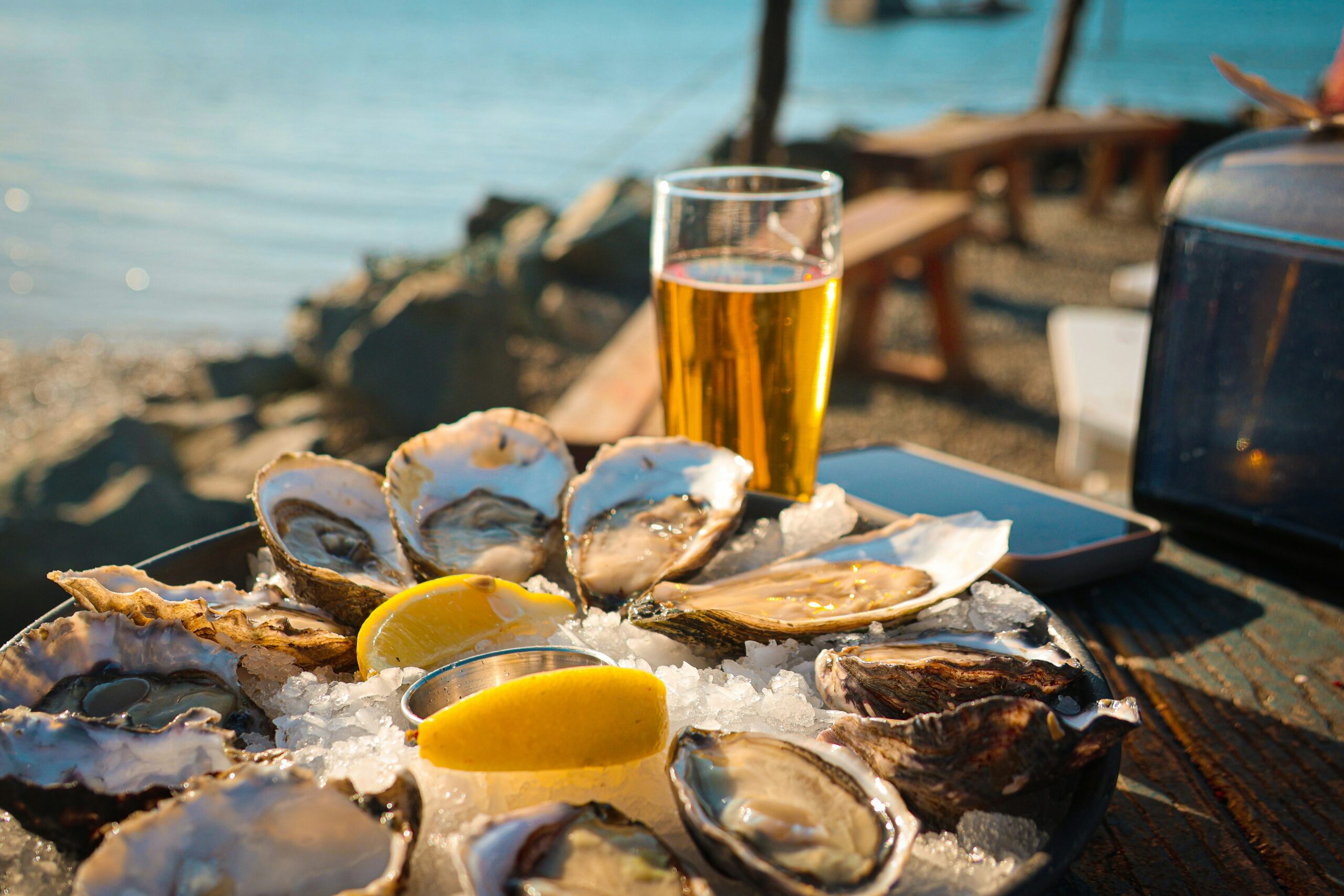
Oysters and Gose beer is one of the great pairings in food and drink, full stop. The logic is elegant: the salinity of the beer mirrors the brine of the oyster, the acidity cuts through its richness and cleanness, and the low alcohol keeps the palate fresh through multiple oysters without fatigue.
This is not a new idea — the combination of sour, salty, effervescent drinks with oysters has centuries of precedent, from Muscadet to stout to Champagne. Gose earns its place in that company.
Serve the Gose well-chilled — around 4–6°C — alongside freshly shucked oysters with nothing more than a wedge of lemon. The beer provides everything else the oyster needs.
Seafood Broadly
The oyster principle extends to seafood generally. Gose beer works beautifully with:
Smoked salmon — the acidity cuts the oiliness of the fish, the salt echoes the cure, and the coriander has an affinity with the dill that typically accompanies smoked salmon. Serve on dark rye bread with cream cheese and you have one of the simplest and best beer pairings imaginable.
Grilled shrimp and prawns — the char from the grill creates a Maillard sweetness that plays well against the sourness. A squeeze of lemon on the shrimp and a Gose alongside is redundant in the best possible way.
Crab — the sweetness of fresh crab meat is lifted by the acidity rather than overwhelmed. Avoid heavy mayonnaise-based preparations which can fight the beer; prefer dressed crab or simply steamed with butter.
Fish tacos — the combination of battered or grilled white fish, lime crema, and pickled jalapeño is practically designed to be eaten with a Gose. The beer mirrors and amplifies every element on the plate.
Salads and Vegetables
Gose beer’s acidity makes it a natural companion for dishes built around vinaigrette — where most beers struggle, Gose thrives.
Fennel and citrus salad — shaved fennel, orange segments, and a light vinaigrette create a dish that shares flavor compounds with both the coriander and the lactic character of the beer. This is one of those pairings where the food and the beer seem to be made of the same ingredients.
Pickled vegetables — the sourness of pickled cucumber, carrot, or red onion harmonizes with the lactic character of the beer rather than fighting it. A Gose alongside a plate of house pickles is a natural.
Asparagus — long considered difficult to pair with wine due to sulfur compounds, asparagus finds a more natural companion in beer, and Gose in particular. The acidity and carbonation handle the vegetable’s vegetal bitterness, and the mineral saltiness of the beer echoes asparagus’s own subtle mineral quality.
Grain bowls and salads with citrus dressing — the lighter and more acidic the dressing, the better Gose works. Farro salad with lemon dressing, tabbouleh, or a simple green salad with a sherry vinaigrette all pair well.
Soft and Fresh Cheeses
The acidity in Gose beer interacts with soft cheeses the way lemon does — cutting richness, brightening flavor, and preventing fatigue through a cheese board.
Fresh goat’s cheese — the classic pairing. The tanginess of young chèvre and the lactic sourness of Gose are made of the same stuff. They don’t contrast so much as harmonize. Serve with a drizzle of honey for a third element that bridges both.
Feta — the salt in feta and the salt in the beer reinforce each other, and the acidity of both cuts through the cheese’s richness. Greek-style dishes — a simple cucumber and feta salad, for instance — pair beautifully.
Ricotta — lighter and creamier than feta or goat’s cheese, ricotta lets the Gose’s subtler flavors come through. Try on toast with honey and black pepper.
Burrata — the rich creaminess of burrata needs the cut that Gose provides. Serve with heirloom tomatoes, good olive oil, and flaked sea salt.
Spiced and Herbed Dishes
The coriander in Gose beer creates an affinity with cuisines that use the same spice — particularly those of Southeast Asia, Mexico, and the Middle East.
Vietnamese-style dishes — pho, banh mi, spring rolls. The fresh herbs and bright acidity of Vietnamese cuisine find a natural companion in Gose. The beer mirrors the lime and fish sauce without competing.
Mexican food — ceviche especially, where the acid-cured fish and citrus dressing are practically Gose in solid form. Also works well with fish tacos, shrimp aguachile, and lighter antojitos.
Indian vegetable dishes — dal, aloo gobi, chana masala. The coriander in the beer picks up on the coriander in the dish, and the sourness cuts through the richness of ghee-based cooking.
Middle Eastern mezze — hummus, baba ghanoush, tabbouleh, labneh. The acidity and mineral saltiness of Gose work well with the sesame, lemon, and herb-forward flavors of mezze.
What to Avoid
Gose beer has real limits. Understanding what it doesn’t pair with is as useful as knowing what it does.
Bold red meat dishes — a smoked brisket, a rich beef stew, or a heavily seasoned steak all overwhelm the Gose’s delicacy. The beer simply disappears. For smoked and cured meats, try our Rauchbier Pairing Guide instead.
Very sweet desserts — chocolate cake, ice cream, or anything with significant sugar creates a jarring contrast rather than a harmonious one. The sourness of the beer reads as harsh against heavy sweetness.
Dishes with strong bitter elements — Brussels sprouts, radicchio, bitter coffee sauces. The Gose has no bitterness to balance against, and the combination can taste discordant.
Heavily spiced heat — very spicy dishes amplify the perception of acid, which can make the Gose taste harsher than it is. Mild to moderate spice is fine; dishes where heat is the dominant flavor are not ideal.
A Seasonal Perspective
Gose beer is fundamentally a warm-weather beer — refreshing, low in alcohol, and built for thirst rather than contemplation. The pairings that work best reflect this:
Spring — asparagus season is Gose season. Fresh goat’s cheese, early salads, light fish dishes.
Summer — oysters, grilled seafood, fish tacos, Vietnamese and Mexican food eaten al fresco. The salt and carbonation of Gose beer make it one of the best thirst-quenchers in the beer world on a hot day.
Autumn and winter — Gose works less naturally with the richer, heavier dishes of colder months. Consider it as a palate cleanser between courses of a longer meal, or paired with the lighter elements of a spread — fresh cheeses, pickled vegetables, smoked fish — rather than as the primary accompaniment to a main course.
Building a Gose Pairing Menu
For a simple but impressive Gose-focused meal:
Aperitivo: Gose with freshly shucked oysters and lemon
First course: Smoked salmon on dark rye with cream cheese, capers, and dill — Gose alongside
Main: Fish tacos with pickled red onion, lime crema, and coriander — Gose throughout
Cheese: Fresh goat’s cheese with honey and walnuts — final glass of Gose
This menu works for four people with two or three bottles of Gose per person — the low ABV (4.0–4.8%) means it’s a comfortable amount over the course of a meal.
How to Serve Gose Beer
Getting the serving right makes a meaningful difference to both the beer and the pairing experience. Gose is a delicate, highly carbonated style — the wrong glass or temperature can flatten what should be lively and refreshing.
Serving temperature: 5–8°C (41–46°F). Gose should be served cold, but not so cold that it mutes the flavors that make the pairings work. At the lower end of this range the beer is refreshing and lively; at the upper end the salt, coriander, and acidity open up and interact more expressively with food. For pure drinking on a hot day, go colder. For a meal, err toward the warmer end of the range.
Glassware: The traditional Leipzig vessel for Gose is a stange — a straight-sided cylindrical glass, similar to those used for Kölsch and Altbier. Tall, narrow, and unpretentious, it keeps the beer cold, supports the carbonation, and lets the hazy golden color show. A stange glass set (affiliate link) is the authentic choice and doubles for Kölsch and Berliner Weisse.
For a more modern alternative, a Rastal Teku glass (affiliate link) works well — its tulip shape concentrates aroma and suits the style’s complexity. Avoid Weizen glasses for Gose; despite being a wheat beer, the traditional vessel is quite different from the bulbous Hefeweizen glass.
Traditionally, Gose in Leipzig was served with a small paper collar around the top of the glass to catch overflow foam — a charming detail that speaks to the beer’s high carbonation. You don’t need to replicate this at home, but it’s worth knowing about when you encounter it in a bar.
Pouring: Pour in one smooth motion, tilting the glass at 45° initially and straightening as the glass fills. Gose is highly carbonated — a rough pour will produce an unmanageable head. Finish with a small head of white foam.
Glassware to avoid: Pint glasses and mugs. The wide mouth dissipates the aroma and the carbonation drops too quickly. Save those for your lagers.
Final Thoughts
Gose beer rewards the food-curious drinker more than almost any other style. Its sourness, salt, and spice give it a range that most beers simply don’t have — it can accompany a delicate oyster, a spiced fish taco, or a tangy goat’s cheese with equal authority.
The key is matching its lightness and acidity rather than fighting them. Bring the right food to the table and Gose beer stops being a curiosity and becomes something close to essential.
Explore more:
Brew Cartographer explores the history, geography, and craft of rare and forgotten beer styles. Subscribe to our newsletter for new expeditions every week.