What is Rauchbier beer, and why does it taste like someone dropped a campfire into a glass of lager? This centuries-old German smoked beer from the Franconian city of Bamberg is one of the most polarizing and historically significant styles in the brewing world — a direct, unmodified link to how all beer tasted before the invention of indirect kilning in the early nineteenth century. Today, while most brewing traditions have left smoke behind, Bamberg’s brewers have held the line, producing Rauchbier (“smoke beer” in German) with the same beechwood-smoked malt their ancestors used. The result is a full-bodied amber lager threaded with the aroma of a smokehouse, a bacon sandwich, or a forest fire at dusk, depending on who you ask.
This expedition maps the geography of Rauchbier’s birthplace, traces the historical arc from universal brewing practice to endangered regional specialty, examines what the style actually tastes and looks like, and identifies the commercial examples most worth seeking out. For the homebrewer’s perspective, see our companion How to Brew Rauchbier at Home guide. For pairing suggestions, visit the Rauchbier Food Pairing Guide.
The Geography: Bamberg, Franconia
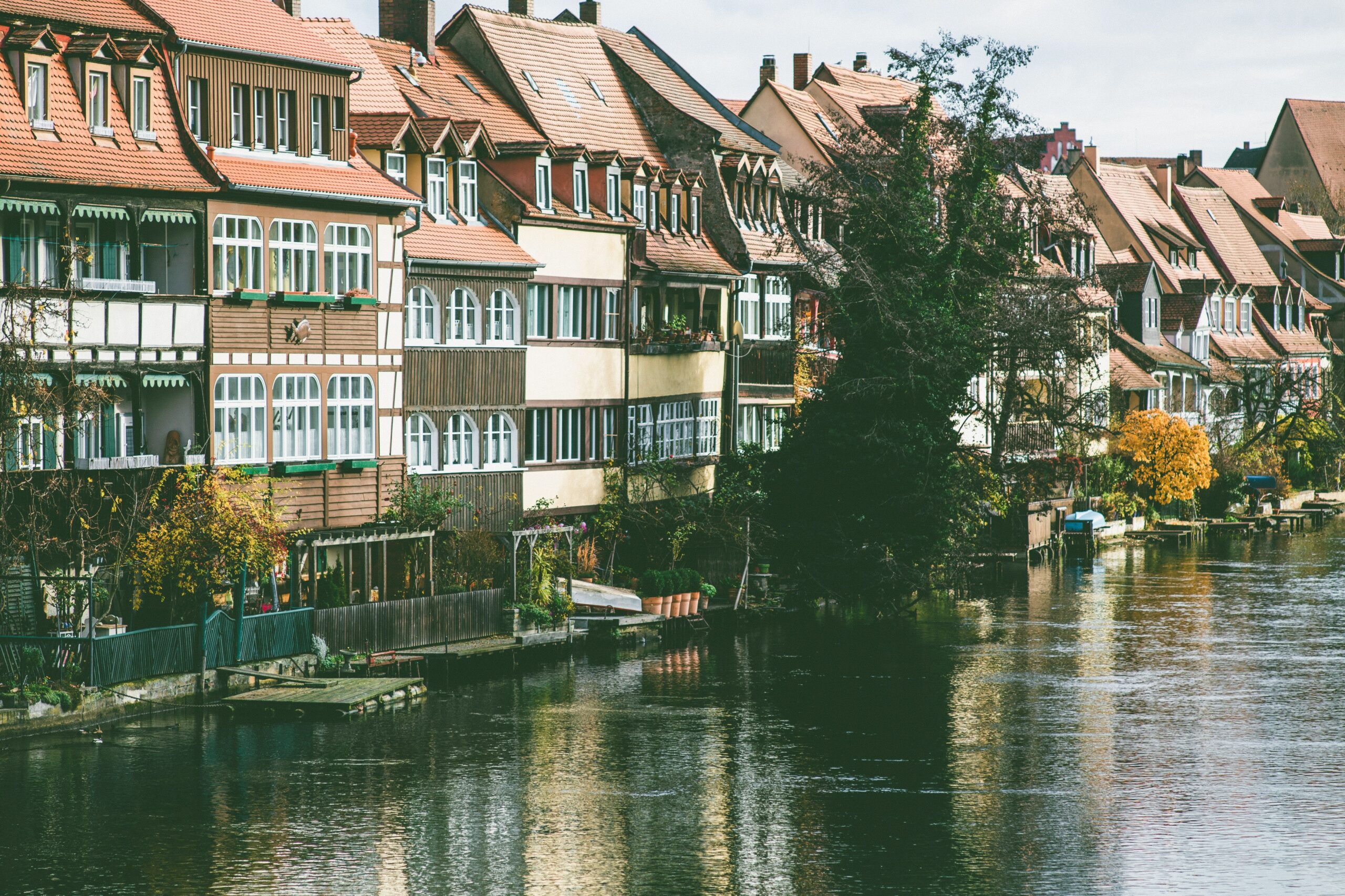
Bamberg is a small city in the Franconian region of northern Bavaria — not the Bavaria of lederhosen tourism and mass-market Oktoberfest lager, but the older, quieter Bavaria of independent brewing culture, sandstone churches, and river valleys cut through dense forests of beech and oak. The city sits at the confluence of the Regnitz and the Main-Danube Canal, about 65 kilometers north of Nuremberg, and it has been a brewing center since at least the fourteenth century. In 1993, UNESCO designated Bamberg’s entire historic city center a World Heritage Site; the city’s nine breweries are considered part of that cultural fabric, not incidental to it.
The specific geography of Bamberg shaped Rauchbier in ways that go beyond romance. The surrounding Franconian forests provided abundant beechwood — the fuel that brewers historically used to dry their malted barley over open kilns. Before the industrial revolution and the development of coke-fired indirect kilning, virtually all malt was dried this way, imparting smoke character to virtually all beer. What makes Bamberg exceptional is not that it once made smoked beer — everything did — but that it never stopped. When the rest of the brewing world modernized and moved to pale, smoke-free malt in the nineteenth and twentieth centuries, a handful of Bamberg’s traditional breweries simply continued doing what they had always done.
Today, Rauchbier is synonymous with Bamberg even though the style can technically be brewed anywhere. Several breweries in the region produce versions, but two command the most attention: Schlenkerla and Spezial. Schlenkerla, formally known as Brauerei Heller-Trum, operates a brewpub in a medieval half-timbered building that has housed a brewery since at least 1405. Spezial, founded in 1536, is quieter in profile but equally traditional in method. These two breweries define the canonical Rauchbier experience and represent different expressions of the style — Schlenkerla assertive and intensely smoky, Spezial softer and more integrated.
The History: From Universal Practice to Deliberate Tradition
The history of Rauchbier is partly the history of smoked beer and partly the history of what happened when the world moved on and Bamberg chose not to follow.
Before the mid-nineteenth century, smoke was simply part of beer. Malt was dried over wood or peat fires because there was no other practical method; the heat needed to stop the germination process and reduce moisture came from direct combustion. The resulting malt carried whatever flavor compounds the fuel imparted — beechwood, alder, peat, or whatever local wood was cheapest and most abundant. Early brewing literature from England, Germany, and across Europe confirms that pre-industrial beer was routinely smoky, and often heavily so. When English maltsters began adopting coke-fired indirect kilning in the late seventeenth and early eighteenth centuries — a shift pioneered gradually across the English Midlands — they were not solving a flavor problem so much as achieving a new aesthetic: clean, clear, pale beer that appealed to changing tastes and the new fashion for glass drinking vessels. That innovation spread, and over the following two centuries, smoke progressively disappeared from beer across Europe.
Bamberg’s retention of smoked malt is often attributed to simple conservatism — Franconian brewers kept doing what worked. But the reality is probably more nuanced. The city’s breweries were small, local, and insulated from the pressures that drove industrial-scale breweries to optimize for consistency and broad appeal. Local drinkers had grown up with smoked beer; it was normal, not exotic. The Schlenkerla brewery, in particular, maintained its own maltings and direct-fired kilning process as a point of pride and commercial identity. The smoke was not a survival tactic; it was a statement.
By the twentieth century, Rauchbier had become genuinely rare even in Germany. Outside Bamberg and a handful of Franconian villages, smoked beer was essentially unknown. The craft beer movement of the 1980s and 1990s brought some external attention to Bamberg’s breweries, and the growing international interest in regional and traditional styles created a small but passionate audience for Rauchbier. Today, Schlenkerla exports to dozens of countries and operates a thriving brewpub that draws beer tourists from across Europe and the United States. Rauchbier is no longer in danger of disappearing, but it remains a deeply localized style — the product of a specific place and an unbroken tradition rather than a style that has spread through imitation.
The BJCP recognized the style formally in its 2015 and 2021 guidelines, codifying what Bamberg’s brewers had been doing instinctively for centuries. That recognition has encouraged a generation of craft brewers to experiment with smoked malt, though very few have matched the intensity and authenticity of the Bamberg originals.
What is Rauchbier Beer? Taste, Aroma, and Appearance
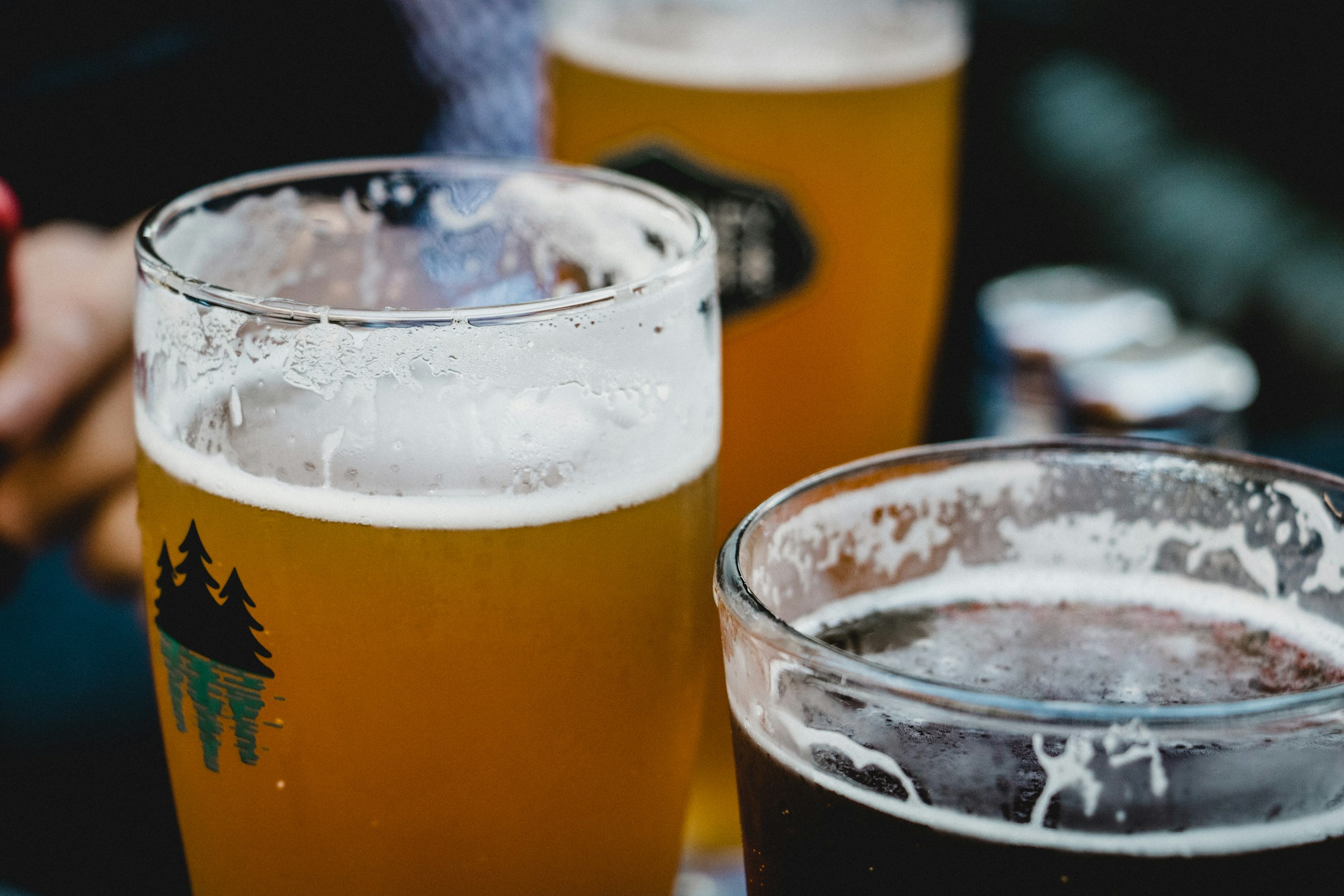
Appearance: Rauchbier pours a rich amber to deep copper, with excellent clarity when properly lagered. The head is off-white to tan, moderately dense, and persistent. The beer looks, at first glance, like a well-made Märzen or Oktoberfest lager — it is only when you bring it to your nose that the similarity ends.
Aroma: Smoke is the dominant note, ranging from gentle campfire character in lighter examples to assertive smoked meat, bacon, or cured ham in the Schlenkerla flagship. The smoke in a great Rauchbier is clean and wood-derived, without acrid or ashy notes. Beneath it: sweet, toasty malt character reminiscent of fresh bread, a suggestion of caramel, and trace amounts of noble hop spice. The aroma integration matters enormously — in a well-made Rauchbier, the smoke and malt enhance each other rather than the smoke obliterating everything else.
Flavor: The first sip is polarizing precisely because Western palates rarely encounter wood smoke in a beverage context. Those who stay with it discover that the smoked malt delivers more than just smoke — it carries toasted bread sweetness, a savory, almost umami-adjacent quality, and a gentle bitterness from the Franconian noble hops. The balance in classic examples is firmly malt-forward; bitterness is present but restrained, serving as a structural element rather than a flavor. The finish is clean and dry, as befits a lager, with a lingering smoke note that fades slowly.
Mouthfeel: Medium-full body with moderate carbonation. The texture is smooth and rounded, not thin or watery — the substantial malt bill gives Rauchbier a satisfying presence without heaviness.
ABV: Typically 4.8–6.0%, with most traditional examples falling in the 5.0–5.4% range. The BJCP classifies Rauchbier under Category 6B (Rauchbier) in the 2021 guidelines, within the Amber Malty European Lager family. Schlenkerla Märzen, the flagship, comes in at approximately 5.1% ABV.
The Ingredient That Defines Rauchbier: Beechwood-Smoked Malt
No discussion of Rauchbier can avoid its central ingredient: beechwood-smoked malt. This is the element that distinguishes the style from every other amber lager on the planet, and understanding it matters both for appreciating commercial examples and for brewing the style at home.
Traditional Rauchbier malt is produced by kilning green (freshly malted) barley over a direct fire of beechwood logs. The process imparts phenolic smoke compounds — principally guaiacol and its derivatives — that give the malt its characteristic flavor. Beechwood produces a relatively clean, sweet smoke compared to oak, peat, or cherry wood; it is the reason Rauchbier’s smoke character tends toward cured meat and campfire rather than the more medicinal or earthy notes found in peat-smoked Scotch whisky or alder-smoked salmon.
Schlenkerla operates its own traditional maltings in Bamberg, producing smoked malt by methods that have changed little in centuries. The intensity of smoke character varies by vintage and batch, which is part of what makes Schlenkerla’s beers a living tradition rather than an industrially standardized product. Spezial uses a lighter hand with smoked malt, blending it with conventional pale malt to produce a more subtle smoke expression — what regulars describe as the “everyday drinking” interpretation compared to Schlenkerla’s more emphatic version.
For those building a recipe, smoked malt proportion is the primary lever. Traditional Rauchbier uses anywhere from 50% to 100% smoked malt in the grain bill. Lower percentages (30–50%) produce a subtler smoke background; higher percentages (80–100%) yield the assertive, bacon-forward character of a classic Schlenkerla Märzen. The skill lies in balancing smoke intensity with the underlying malt sweetness that makes the beer drinkable rather than one-dimensional.
Commercial Examples Worth Seeking Out
-
Aecht Schlenkerla Rauchbier Märzen — The definitive example. Brewed in Bamberg since at least the fourteenth century in its current form, this amber lager is intense, assertive, and unmistakable. At 5.1% ABV, it is simultaneously challenging for newcomers and deeply rewarding for those who stay with it. This is the benchmark against which every other Rauchbier is measured.
-
Brauerei Spezial Rauchbier — Bamberg’s quieter answer to Schlenkerla. Spezial’s version uses a lighter smoke character, integrating the beechwood notes more gently into a rounded, malt-forward lager that is arguably the more accessible everyday version of the style. Available locally in Bamberg and occasionally through specialist importers.
-
Aecht Schlenkerla Rauchbier Urbock — The brewery’s stronger seasonal offering, released in the autumn. At 6.5% ABV, the Urbock amplifies everything that makes the Märzen remarkable: deeper malt sweetness, more intense smoke, and a warming finish that makes it one of the best cool-weather beers in existence.
-
Aecht Schlenkerla Rauchbier Weizen — An unusual expression: a wheat beer brewed with smoked malt, producing a beer that merges the banana and clove esters of a traditional Hefeweizen with beechwood smoke. The contrast is startling but, for open-minded drinkers, genuinely compelling.
-
Alaskan Smoked Porter — For North American drinkers, Alaskan Brewing Company’s smoked porter is among the most celebrated domestic interpretations of smoked malt character. Not a Rauchbier in the German sense — it’s a dark ale, not an amber lager — but it demonstrates the range of what smoked malt can do and has introduced many American drinkers to the concept. (Check current availability, as the brewery’s release schedule has shifted in recent years.)
-
Stone Smoked Porter — Another widely available US example, more approachable in smoke intensity than Alaskan’s version. Useful as an entry point for the style-skeptical drinker, though it shares only the smoked malt technique with traditional Rauchbier rather than the lager character.
How Does Rauchbier Compare to Similar Styles?
Rauchbier is occasionally confused with other smoked or dark lager styles, and the distinctions are worth clarifying.
Versus Märzen/Oktoberfest: Rauchbier Märzen is essentially a traditional Märzen recipe brewed with smoked malt replacing some or all of the base malt. The beer shares the amber color, malt-forward character, and clean lager fermentation of a classic Märzen; the smoke is the sole differentiator. A Märzen without smoke is the direct ancestor of the Rauchbier you’re drinking.
Versus Smoked Porter: Smoked Porters are dark ales, typically British-derived in character, with roasted malt bitterness and dark fruit notes alongside the smoke. Rauchbier is a pale-to-amber lager; its smoke sits on a bed of bread and caramel malt sweetness rather than roast. The differences in fermentation character and base malt profile are substantial.
Versus Peated Scotch Whisky: Not a beer comparison, but relevant because many newcomers reach for Scotch whisky as a reference point for smoke. Peat smoke is chemically distinct from beechwood smoke — it produces more phenolic, medicinal, iodine-adjacent notes. Rauchbier’s beechwood smoke is cleaner and sweeter. If you love peated Scotch, you’ll likely appreciate Rauchbier; if you find peated Scotch medicinal, Rauchbier may be a gentler entry point into smoked fermented beverages.
Rauchbier matters because it is not a recreation or a craft beer experiment — it is an unbroken tradition, a window into how beer tasted before the industrial revolution standardized the brewing world. Drinking a Schlenkerla Märzen is drinking history in the most literal possible sense: the same ingredients, the same kilning method, the same lagering caves beneath Bamberg’s old city. That continuity is rare in any industry and extraordinary in beer.
Ready to go deeper? – How to Brew Rauchbier Beer at Home → – Rauchbier Beer Food Pairing Guide →
Brew Cartographer explores the history, geography, and craft of rare and forgotten beer styles. Subscribe to our newsletter for new expeditions every week.
Join The Dispatches — new expeditions, brew guides, and food pairings delivered when something worth reading goes live. No noise, no frequency targets. Sign up here →
Brew Cartographer explores the history, geography, and craft of rare and forgotten beer styles.