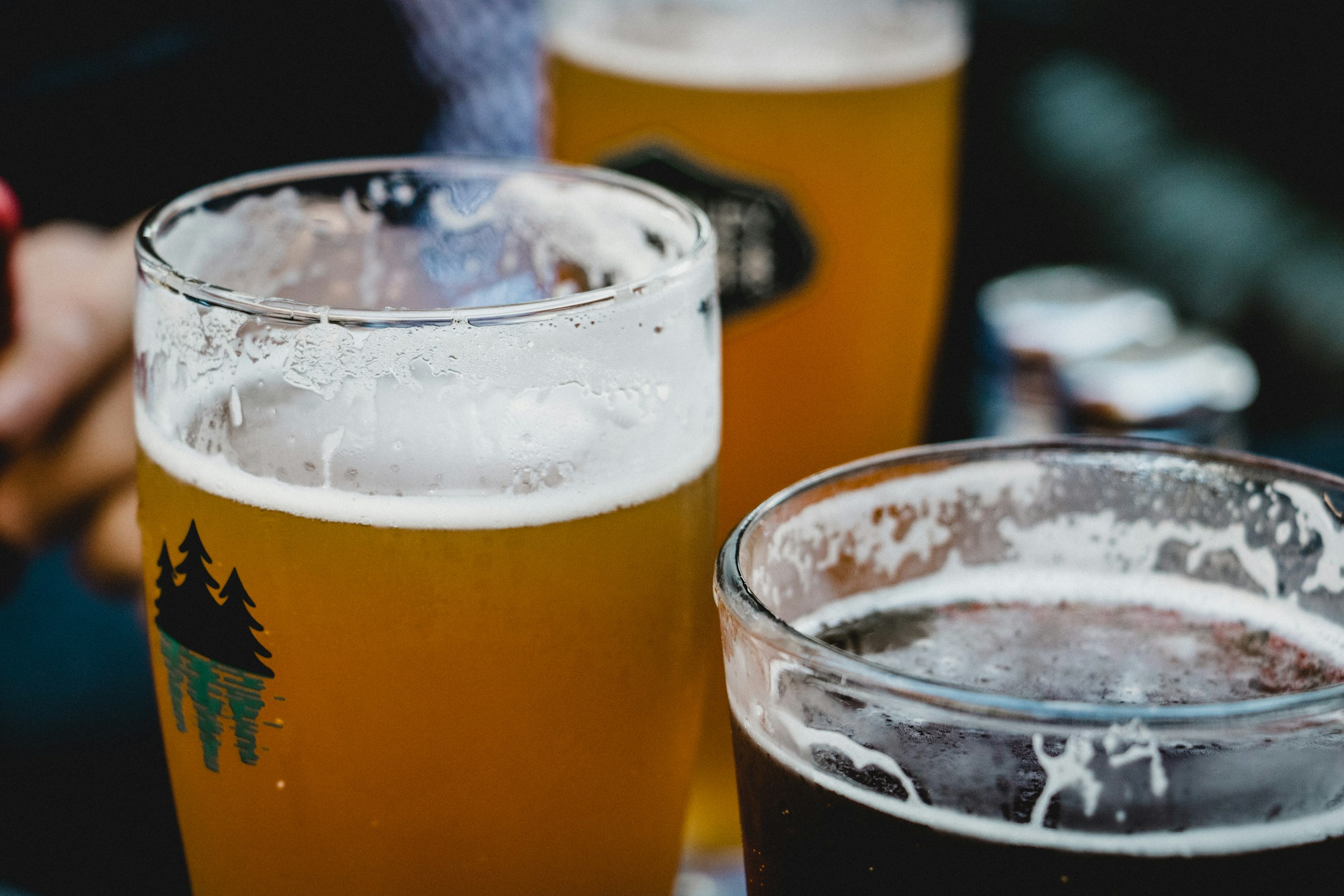
Cascadian Dark Ale beer food pairing rewards those willing to think past the visual — this jet-black beer behaves like a West Coast IPA at the table, and understanding that paradox opens up a surprisingly wide range of culinary territory. The dark color signals richness, but the flavor profile signals bitterness, resin, and citrus, and those are the qualities that matter when you’re choosing what to put on the plate.
This guide charts the flavor interactions that make CDA pairings work, identifies the foods that share its territory, and walks through the serving conditions that bring out its best. For more on the style itself, visit What is Cascadian Dark Ale Beer? →. If you’d like to brew your own, the How to Brew Cascadian Dark Ale at Home → has the full recipe.
The Flavor Principles Behind Cascadian Dark Ale Pairing
To pair CDA well, you need to work with two distinct flavor forces that exist in the same glass. The first is the hop character: high bitterness (typically 60–75 IBU), resinous pine, citrus peel, and sometimes tropical fruit. The second is the dark malt character: dry cocoa, coffee, and a slight roasty dryness that stops well short of a stout’s sweetness. Together, these forces create a beer that is simultaneously bitter and dark, dry and aromatic.
The bitterness in CDA functions much like tannins in a dry red wine at the table — it cuts through fat, refreshes the palate between bites, and creates contrast with rich, savory foods. A fatty burger or a piece of aged cheddar doesn’t overwhelm the beer; the bitterness reasserts itself and keeps things clean. This is the beer’s most powerful pairing tool.
The dry roast character acts as a bridge to foods with caramelized, grilled, or smoked elements. A sear on a steak, a crust on roasted vegetables, a smear of coffee-based barbecue sauce — all of these find common ground with the roasty notes in the malt. Where a pale IPA might clash with smoky or charred flavors, the CDA meets them on equal footing.
The hop aroma — particularly the citrus and tropical fruit notes from American cultivars like Cascade, Simcoe, and Centennial — acts as a fresh counterpoint to heavy, rich foods. A wedge of blue cheese or a plate of smoked brisket would overwhelm many beers; the CDA’s aromatic intensity holds its own. The carbonation also does meaningful work here, physically scrubbing fat from the palate and preparing you for the next bite.
One important consideration: the high bitterness means the beer competes poorly with sweet foods. Desserts, sweet sauces, and fruit-based preparations will amplify the bitterness to an unpleasant level. Keep the food savory, charred, or salty, and the beer will reward you.
Burgers and Grilled Meats — The Classic Pairing
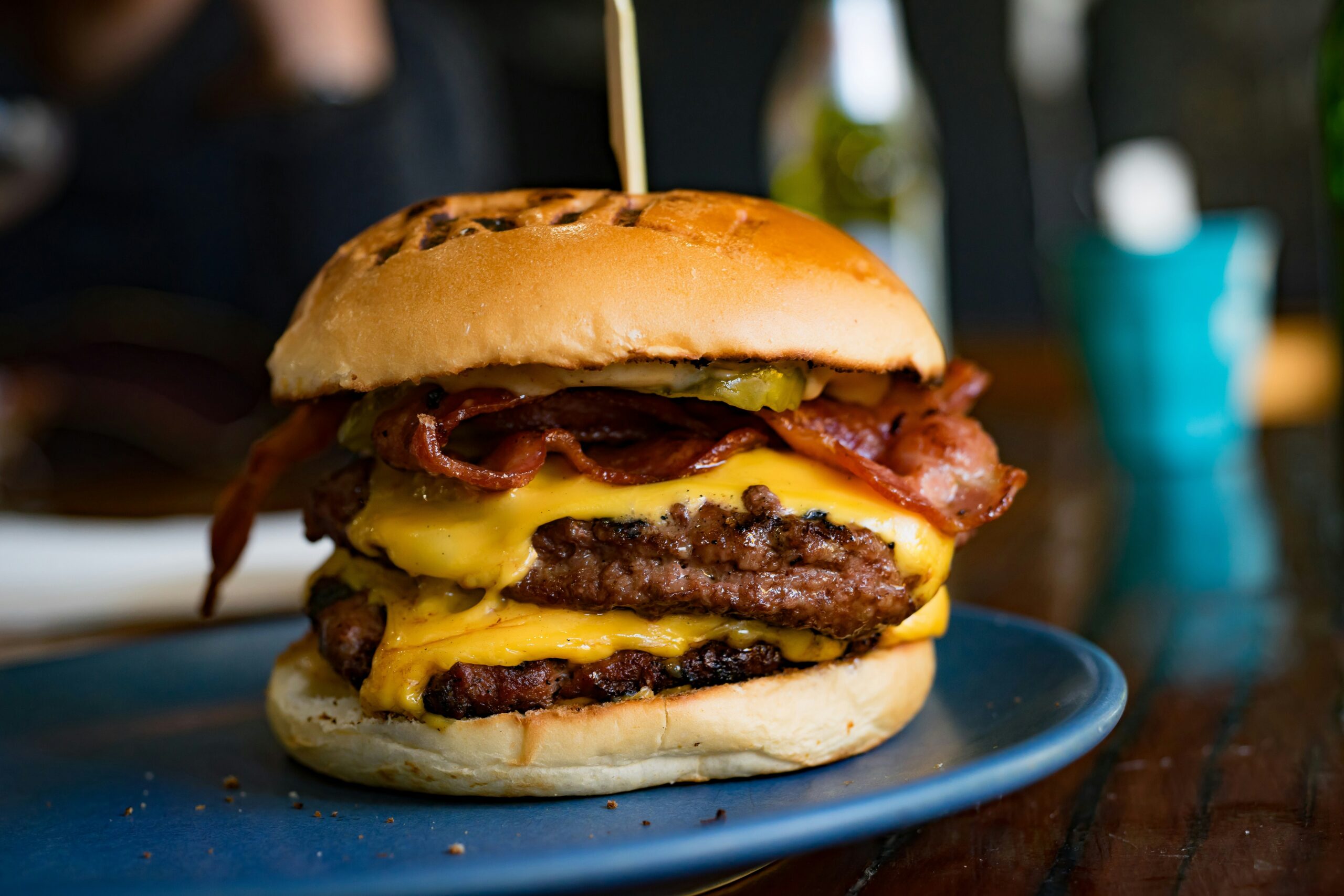
If there is one food that seems purpose-built for Cascadian Dark Ale, it is the American burger. The combination of fat from beef and cheese, char from the grill, and savory umami from caramelized onions or mushrooms creates a flavor matrix that the CDA navigates perfectly. The bitterness cuts the fat, the roast character echoes the char, and the hop aroma adds a fresh, aromatic counterpoint to the richness.
A classic double cheeseburger with aged cheddar and grilled onions is an excellent starting point. Move up in richness to a bacon blue cheese burger and the pairing only improves — the beer’s bitterness and aromatic intensity rise to match the salt and pungency of the blue cheese. A smash burger with a hard crust on the patty, where the Maillard reaction has produced maximum caramelized crust, is arguably the best possible burger pairing for this beer.
Beyond burgers, any grilled or seared red meat works well. A ribeye with a coffee-spice rub echoes the roasty malt character directly. Grilled lamb chops with garlic and rosemary find common ground with the resinous hop character — both have a herbal, slightly bitter edge that creates an interesting bridge pairing.
Aged and Strong Cheeses
Aged cheese is CDA’s best non-meat companion. The key is salt and intensity: you need a cheese that can match the beer’s bitterness and aromatic power rather than being overwhelmed by it.
Aged cheddar (12+ months): The classic match. The crystalline texture, sharp lactic tang, and caramel-savory notes of a well-aged cheddar create mirror and contrast pairings simultaneously. The fat is cut by the bitterness; the umami depth mirrors the roasty malt.
Smoked gouda: The smoke bridges directly to both the roasted malt and the dark, resinous hop character. A smoked gouda with some age on it is one of the most satisfying CDA pairings you can put together.
Manchego (12+ months): The nutty, slightly sharp character of aged manchego pairs well with the citrus and pine hop notes through bridge and contrast. The firm texture and relatively low moisture make it an easy pairing.
Gorgonzola or Roquefort: Blue cheese and high-bitterness beer is a pairing that requires confidence, but it works. The salt in the cheese suppresses the beer’s bitterness slightly, while the bold, pungent character of the cheese matches the beer’s intensity. Do not attempt this with a mild or fresh blue — you need the aged, strongly flavored type.
What doesn’t work: Fresh, mild cheeses like mozzarella, ricotta, or brie. These are overwhelmed by the beer’s bitterness, and the beer overwhelms the cheese’s delicate dairy character. Save those for lighter styles.
Smoked and Barbecued Foods
The roasted malt character in CDA creates a natural affinity with smoked and barbecued foods, where the common ground of char and caramelization builds a flavor bridge. This is where the CDA diverges from a pale IPA and earns its dark malt contribution.
Smoked brisket with a peppery bark finds the beer’s roast notes echoed in the meat’s crust, while the high hop bitterness cuts through the collagen-rich fat of the brisket. The combination is surprisingly elegant. Pulled pork works similarly, particularly when served with a vinegar-based sauce rather than a sweet one — sweet barbecue sauce will amplify the bitterness unpleasantly.
Smoked sausages — a bockwurst, a kielbasa, or a Pacific Northwest-style smoked elk sausage — are straightforward winners. The fat, salt, and smoke all play to the beer’s strengths, and the sausage doesn’t fight back the way a heavy sauce can.
Wood-fired or grilled vegetables deserve mention here too. Charred romanesco, grilled eggplant with miso, or roasted beets with goat cheese develop caramelized, slightly bitter notes in their exterior that mirror the malt profile. These are not obvious beer-pairing candidates, but they work exceptionally well with CDA.
What to Avoid
Delicate fish and seafood: The bitterness overwhelms the subtle flavors of halibut, sole, or fresh oysters. Grilled or blackened fish can work, but poached or steamed preparations are a mismatch.
Sweet desserts: Chocolate cake, caramel sauce, fruit tarts — any sweet application magnifies the beer’s bitterness to an astringent, unpleasant edge. A small square of 85%+ dark chocolate is the outer limit, and only if the chocolate is genuinely bitter rather than sweet.
Spicy heat: High capsaicin heat and high hop bitterness reinforce each other and compound into a burning, one-dimensional experience. Mild spice with fat to buffer it (a green curry with coconut cream) can be acceptable, but dishes built around pure heat are a poor match.
Light, acidic salads: A simple vinaigrette-dressed green salad clashes with the bitterness and lacks the richness needed to create a satisfying interaction. The beer simply overwhelms the delicate elements.
Sushi: The clean, delicate rice and fish of most sushi is obliterated by the beer’s intensity. The hop bitterness turns the clean umami of fresh fish into a metallic clash.
Cascadian Dark Ale and Pacific Northwest Cuisine
Given the beer’s origins, it’s worth noting the natural affinity with Pacific Northwest ingredients and cooking traditions. Dungeness crab, prepared simply with butter and lemon, is an interesting pairing — the fat and sweetness of the crab is cut by the bitterness, while the citrus hop notes echo the lemon. This works better than most seafood pairings because of the crab’s natural richness and sweetness.
Wild mushrooms — chanterelle, morel, porcini — prepared with butter, garlic, and herbs find genuine common ground with the roasted malt’s earthy, umami notes. A plate of chanterelles on toast with aged gruyère is one of the more sophisticated CDA pairings you can construct.
Pacific Northwest-style barbecue, which tends toward rubs and smoke rather than sweet sauce, is a natural match. Cedar-planked salmon with a pepper-and-dill crust is the most culinarily adventurous pairing in this guide — it works because of the char on the crust and the fat in the salmon, not because fish is typically a good match for bitter beer.
A Seasonal Perspective
Cascadian Dark Ale is fundamentally a cold-weather beer in character, even if it can be enjoyed year-round. The dark color, assertive bitterness, and roasty notes feel at home in autumn and winter, and the foods that pair with it — grilled meats, aged cheeses, smoked preparations — are the foods of those seasons.
In autumn, the beer pairs beautifully with harvest preparations: roasted root vegetables, wild mushroom risotto, game meats like venison or duck. The earthy, slightly bitter quality of the roasted malt bridges to the earthiness of autumn produce in a way that few other beer styles achieve.
In winter, the CDA’s intensity stands up to the richest seasonal foods: braised short ribs, beef stew with root vegetables, cassoulet. The high bitterness cuts through the collagen-heavy braises that characterize cold-weather cooking, and the roasty notes add depth without the sweetness of a stout or porter.
In spring and summer, the beer works best at the grill. Grilled lamb, burgers, or sausages remain excellent companions. The citrus and pine hop character becomes more refreshing when paired with warm-weather foods, though the beer’s intensity means it works better with evening grilling than with a light midday lunch.
How to Serve Cascadian Dark Ale Beer
Serving temperature: 8–10°C (46–50°F). Serve slightly warmer than a lager but cooler than most ales. At too cold a temperature, the roasted malt harshness becomes more pronounced and the hop aroma is suppressed. At too warm a temperature, the bitterness can become aggressive. The 8–10°C range lets the aromatic hop character open up while keeping the roast in check. For food pairing specifically, the warmer end of the range (10°C / 50°F) allows more aroma expression to interact with the food.
Glassware: Unlike European styles with centuries of glassware tradition, CDA is a modern American style — there is no historically prescribed glass. The Shaker Pint Glass is the de facto standard in Pacific Northwest taprooms purely by convention, and it’s a functional choice that shows the black color effectively. However, for the best aromatic experience, a Tulip Glass is superior. The wider bowl allows the hop aromatics to develop and the slight inward taper at the top concentrates them toward the nose. This matters more for CDA than for most IPAs because the aromatic contrast between the black appearance and the bright hop nose is part of the style’s character.
What to avoid: A Weizen glass is inappropriate for this style — CDA has nothing in common with a hefeweizen and the tall, narrow design adds nothing. A mug or stein works in a casual setting but sacrifices aroma. Avoid tiny tulip snifters used for high-ABV Belgian ales — the portion size is too small and the shape is better suited to sweeter, more complex beers.
Pouring: Pour with a moderate angle, transitioning to vertical as the glass fills. Target a 1–2 finger head of tan to light brown foam. CDAs are typically carbonated at 2.3–2.6 volumes CO₂ — this is moderate carbonation that produces a satisfying but not excessive head. Avoid pouring too aggressively, which will generate excessive foam and blow off the delicate hop aromatics.
Cascadian Dark Ale is a beer of contradictions — dark but hoppy, bitter but aromatic, intense but drinkable — and its food pairings reflect that duality. The best matches are rich enough to stand up to the bitterness, bold enough to match the hop intensity, and savory enough to avoid the sweet-bitter trap. Grill something, age a cheese, and pour it cold.
Explore more: – What is Cascadian Dark Ale Beer? The Complete Style Guide → – How to Brew Cascadian Dark Ale Beer at Home →
Brew Cartographer explores the history, geography, and craft of rare and forgotten beer styles. Subscribe to our newsletter for new expeditions every week.
Join The Dispatches — new expeditions, brew guides, and food pairings delivered when something worth reading goes live. No noise, no frequency targets. Sign up here →
Brew Cartographer explores the history, geography, and craft of rare and forgotten beer styles.